Connect with us

Boxing

Deontay Wilder lost his chance for the WBC belt in the fight for the crown of two weight classes

Published

on

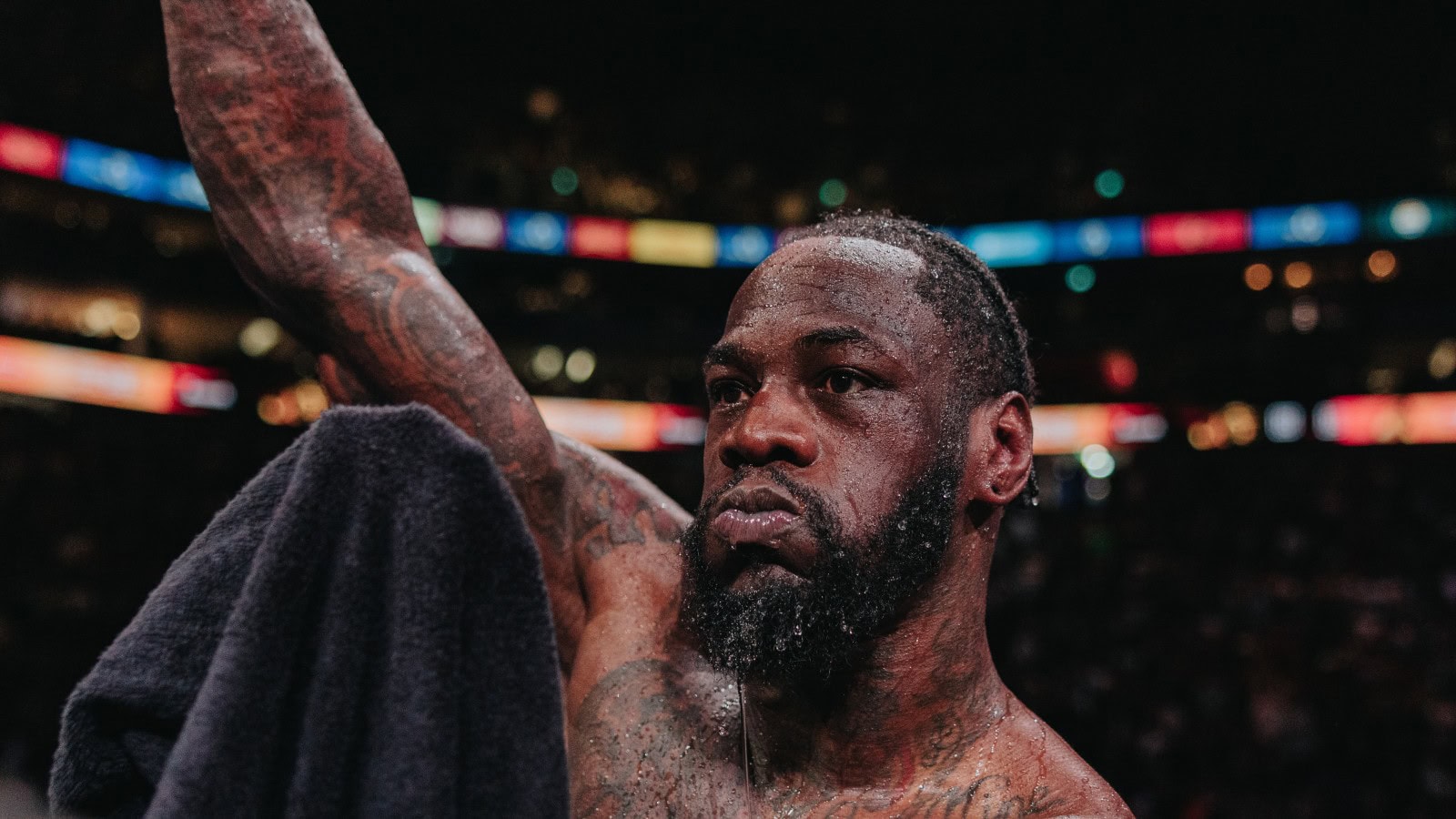
Deontay Wilder celebrates after defeating Derek Chisora in London.

Deontay Wilder could still retire as a two-weight world champion after WBC bridgeweight titleholder Kevin Lerena told World Boxing News he would welcome a fight with the former heavyweight ruler.

The opportunity remains a real possibility as Wilder will naturally climb around the WBC bridgeweight limit of 224 pounds following his recent victory over Derek Chisora, keeping the long-discussed path to a second world title alive should the American decide to pursue another shot at the championship.

Current champion Lerena confirmed to WBN that he would give Wilder a chance without hesitation.

“I would 100 percent give Deontay Wilder a shot at the title,” Lerena told World Boxing News exclusively on Wednesday.

“He is always risky, as he showed in the fight with Derek Chisora. Wilder is one of the toughest boxers of our era. However, I do not back down from any man. I respect everyone and I am not afraid of anyone.”

Deontay Wilder’s bridgeweight option

The possibility of an Olympic bronze medalist winning a second world title outside the heavyweight division had existed for years.

World Boxing News previously revealed that the WBC would approve Wilder for a bridgeweight title shot if he continued with that decision, and president Mauricio Sulaiman confirmed that the sanctioning body would have no problem approving the fight if the fighters reached an agreement.

Even earlier in the division’s history, former champion Oscar Rivas was willing to defend his title against Wilder, showing that the American’s name immediately attracts attention in a newer weight class.

Lerena himself has already talked about the possibility of facing Wilder. Shortly after being elevated to full champion, the South African told WBN he would be open to giving the American a shot at the 224-pound title if the opportunity presented itself.

Wilder himself rejected the division when it was first introduced, insisting that his career would remain at heavyweight, even though the WBC indicated that he would be eligible to fight for the bridgeweight title if he exercised that option.

Since then, the landscape surrounding it has changed significantly.

The future of the heavyweight division is uncertain

After Wilder’s latest victory, there was little fanfare about what might come next.

There are still rumors about a fight with Anthony Joshua, but many observers consider this fight to be challenging for the American at this stage of his career. Others even suggested that he should leave after the victory rather than risk another painful defeat.

Wilder’s weaknesses have been exposed in recent years, and a heavyweight more risky than Derek Chisora ​​could arguably test those weaknesses again.

Moving up to bridge weight involves a different equation.

Lerena is not a airy boxer, but the “Bronze Bomber” would have an advantage over an opponent who would have to weigh the same as him. This is where the danger increases for the champion, who would lose the physical advantage that many heavyweights have abused him over the years.

Wilder’s weight advantage

The WBC bridge weight limit of 224 pounds is within Wilder’s natural range.

The former champion weighed 226 pounds before his fight with Chisora ​​in London and 225 pounds before his fight with Tyrrell Herndon in July 2025. Early in his career, Wilder often competed well below that mark and even talked about moving up to cruiserweight, a division twenty-four pounds lighter than bridgeweight.

Under these circumstances, the Alabama knockout fighter wouldn’t have to drastically change his preparation to reach the limit.

The idea of ​​Wilder finally winning the second division crown has huge benefits as the American seeks another path back to championship prominence.

If Wilder decided to take advantage of this opportunity, few would envy him if he tried to end his career as a two-division world champion.


About the Author

Phil Jay is the editor-in-chief of World Boxing News (WBN) and a boxing veteran with over 15 years of experience. Read the full biography.

Continue Reading
Click to comment

Leave a Reply

Your email address will not be published. Required fields are marked *

Boxing

Derek Chisora Predicts Early KO in Dubois vs Wardley 2 Following First Fight Canvas Drama

Published

on

"Derek Chisora Predicts Early KO in Dubois vs Wardley 2 Following First Fight Canvas Drama"

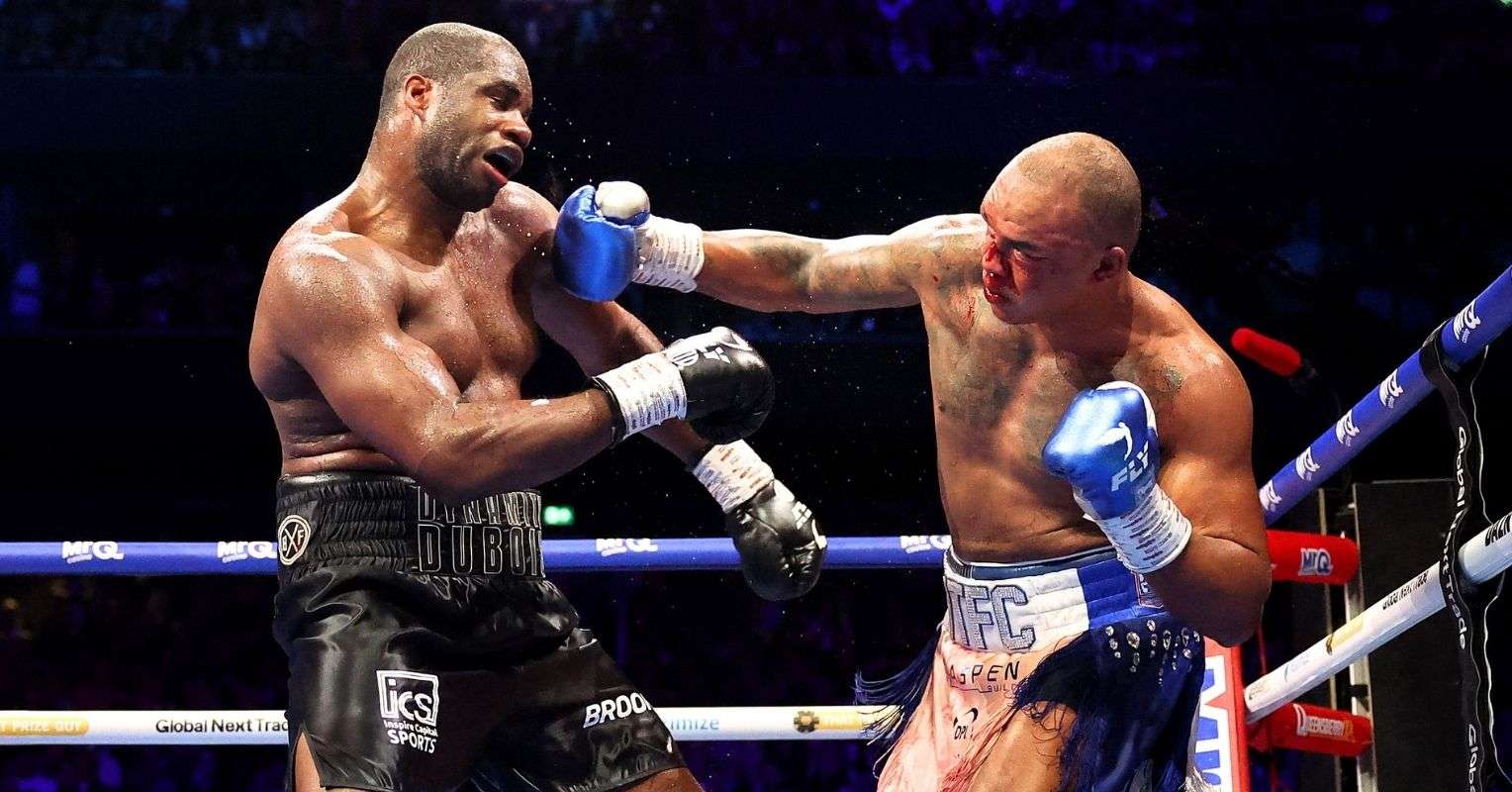
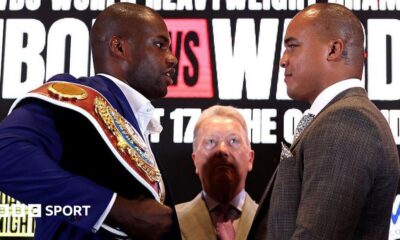
Daniel Dubois seeks a repeat victory over Fabio Wardley in their WBO heavyweight title clash on Saturday, and ahead of the action, fellow British heavyweight Derek Chisora has offered his final prediction for the bout.

Wardley was elevated to full WBO world champion in late 2025 and accepted a daring first defence against ‘Triple D’ at Co-Op Live in Manchester, who had lost his IBF title to Oleksandr Usyk in his prior outing.

Despite being floored twice in the opening three rounds, Dubois was able to bring Wardley’s reign to an early end as he bounced back to dominate proceedings, battering Wardley until referee Howard Foster waved the contest off in round 11.

Wardley absorbed an enormous amount of punishment, but he was still quick to activate his rematch clause and initiate an immediate second meeting with Dubois, in the hopes of becoming a two-time heavyweight world champion.

Although, whilst pursuing a win that could define his career, Chisora told talkSPORT that he believes a second encounter with Dubois could turn out to be Wardley’s career finale, anticipating an early stoppage win for the reigning WBO heavyweight champion.

“I think that this is Wardley’s last fight. I don’t think that he wants to box anymore. This is his cash out.

“After three rounds, Daniel’s going to win it by knockout.”

All will be revealed when Dubois vs. Wardley II takes place this weekend at the O2 Arena in Londonwith Michael Gomez Jr set to challenge for Louie O’Doherty’s British lightweight title in the co-main event.

Continue Reading

Boxing

Tyson Furys Advantage: The Importance of Leg Endurance in Boxing

Published

on

"Tyson Fury's Advantage: The Importance of Leg Endurance in Boxing"

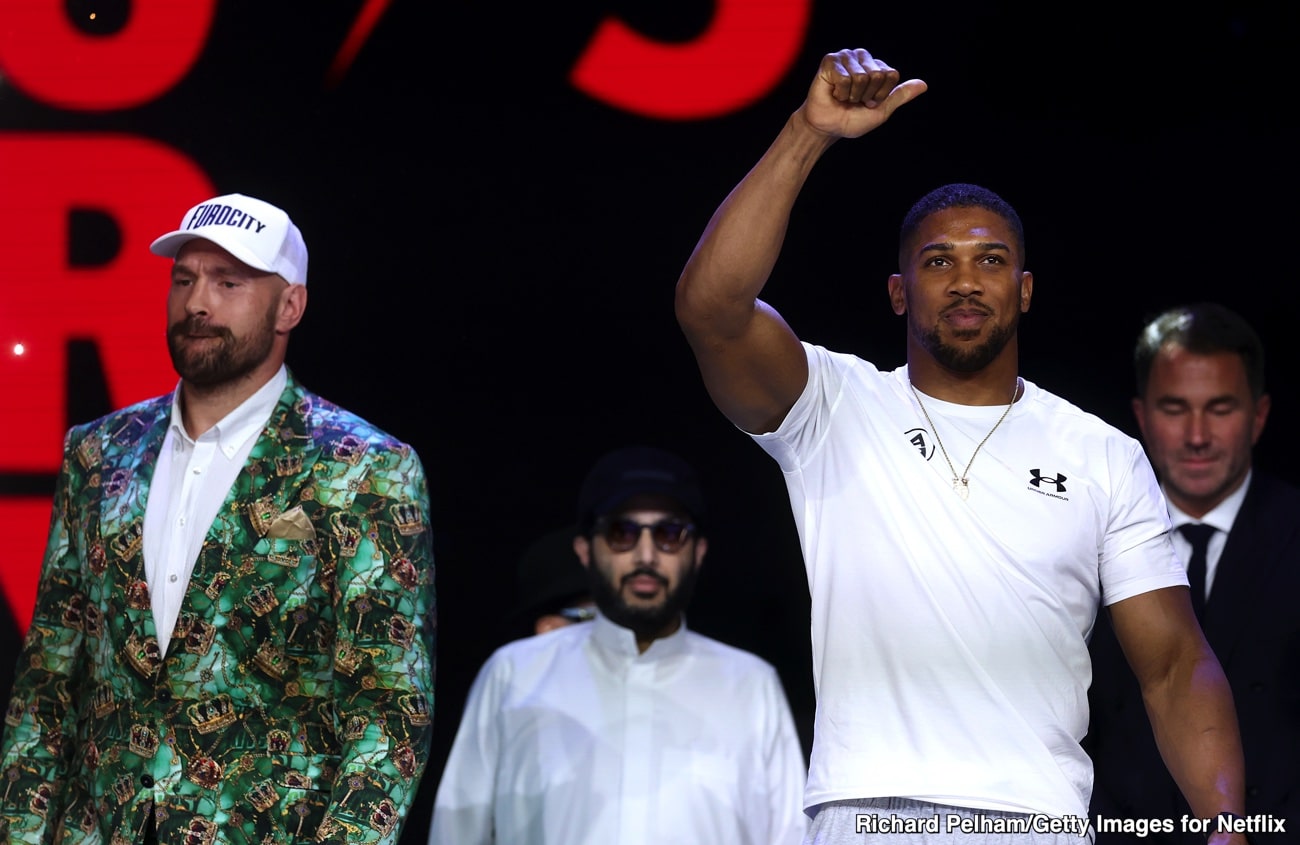
Paulie Malignaggi likes Tyson Fury’s style against Anthony Joshuabut only if the Gypsy King’s legs still hold up to control range. He points out that Joshua must close the distance, yet doubts AJ has the footwork required to get there.

Fury’s movement creates the main problem. If he keeps Joshua following his lead and constantly resets AJ’s rhythm, Joshua risks spending the entire night chasing shadows instead of landing meaningful shots.

“AJ has to obviously get in close,” Malignaggi told Boxing King Media. “It’s not easy against a guy with the footing of Fury, but who knows, maybe Fury’s old legs are a little slower.”

That lingering doubt stops Paulie from locking in a definitive pick. Fury understands how to dictate distance against AJ, but executing that plan across twelve rounds takes functional wheels.

If Fury has lost a step, Joshua gets a direct route into punching range without burning energy on pursuit. AJ does not need sudden speed if Fury can no longer skip away. Joshua simply has to capitalize whenever Fury sits in the pocket.

At the same time, Malignaggi remains skeptical about Joshua’s mobility.

“I think AJ’s feet are a bit cumbersome, though. So, I think the size of the ring and things like that will also matter in the fight.”

A larger ring hands Fury extra space to glide and forces Joshua to cover real estate. A tighter ring gives AJ a clear path to trap his rival, though he must cut off the ring instead of trailing behind.

Paulie’s breakdown hinges entirely on Fury’s mobility. If the legs work, Joshua’s heavy feet could leave him swinging at air. If those legs fade, AJ suddenly finds a manageable target. Malignaggi spots the stylistic edge, but he refuses to assume Fury can still pull it off. He is analyzing a long-gone version of Tyson Fury from ten years ago, not the lumbering heavyweight who actually steps into the ring today.

That 2015 night in Düsseldorf against Wladimir Klitschko might as well belong to another century. Ever since the Usyk beatdowns, the slow-motion survival against Wach, and that labored outing against Makhmudov, Fury has looked completely grounded.

The twitch reflex is gone, the lateral bounce has vanished, and his upper-body slips look like they are running through wet cement. When heavyweight legs check out, no amount of altitude running or motivational talk in Morecambe brings them back.

Share this article

About the author

Boxing 24/7 Wire

Boxing247.com is an independent boxing news publication covering the sport since 2001. It provides original reporting, fight analysis, schedules, results, and informed coverage of major fighters and events worldwide, backed by more than 25 years of professional boxing journalism.

Continue Reading

Boxing

Nakisa Bidarian Explains the Financial Principles Driving Canelos Commitment

Published

on

"Nakisa Bidarian Explains the Financial Principles Driving Canelo's Commitment"

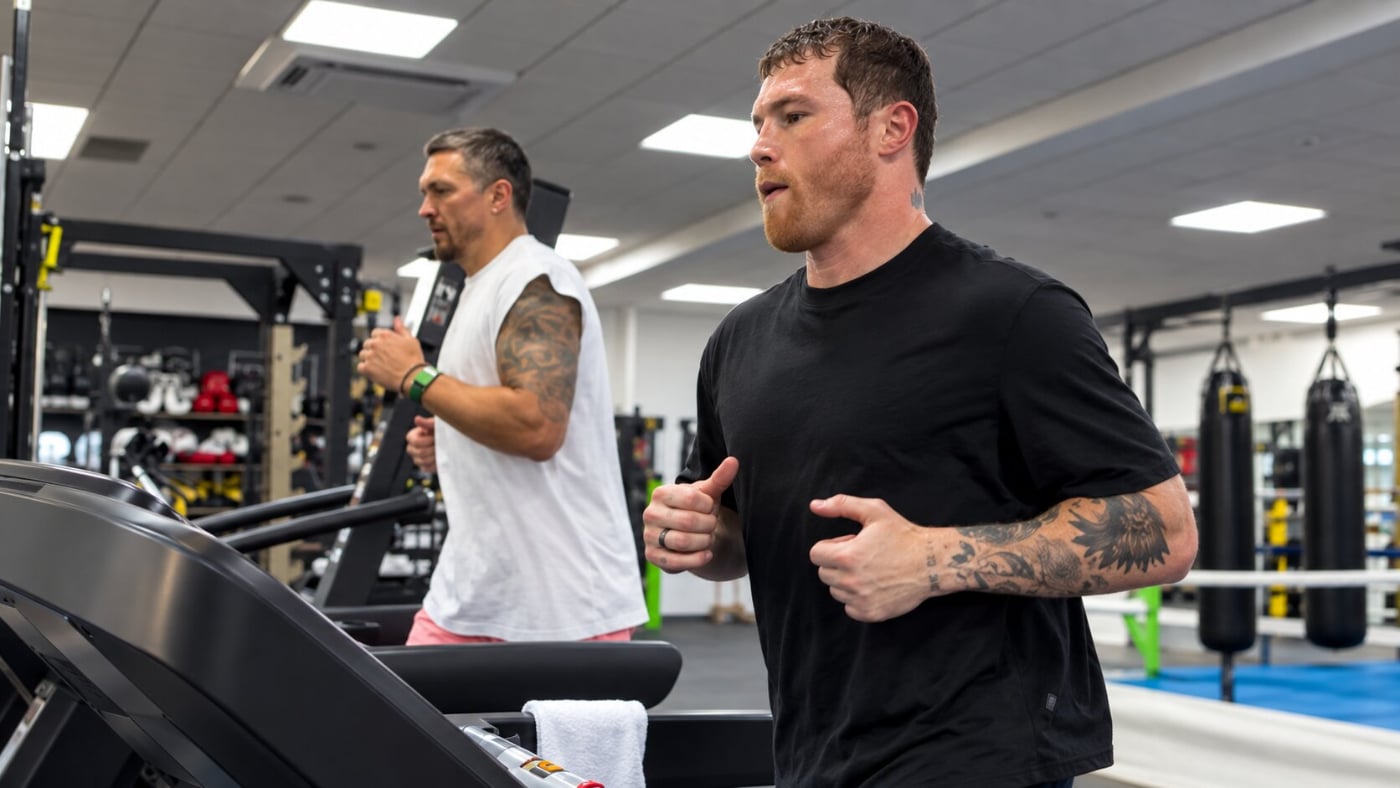
Nakisa Bidarian believes Canelo Alvarez could lose his purse if he withdraws from the October 31 fight with Christian Mbilli in Riyadh, but might still get paid if the organizers cancel. His theory offers a financial explanation for Canelo’s commitment to fighting despite the security concerns.

“My read: Canelo is due a lot of money. If he pulls out he is no longer due that money. If the event is cancelled he is probably also due that money. Tough situation,” said Bidarian on X.

Turki Alalshikh says Canelo remains committed to fighting Mbilli in Riyadh following deadly attacks on the city’s international airport. Reuters reported that a Saturday strike killed at least 12 people and wounded more than 300, with another attack on Sunday killing one person.

Bidarian’s reading gives Canelo’s willingness to proceed another possible explanation beyond the “he fears nothing” message. Under that theory, Canelo could protect his payday by remaining ready to fight and letting the organizers decide whether the event can proceed.

That would put Canelo in an awkward position. He could have concerns about traveling without wanting to formally withdraw and potentially give up a huge purse. Saying he’s available would make financial sense even if he privately preferred a postponement or a different location.

However, Bidarian hasn’t presented Canelo’s contract or identified a cancellation clause. His wording makes clear that this is his interpretation. Whether Canelo would receive payment after a cancellation remains unconfirmed.

His post also doesn’t establish that money is driving Canelo’s decision. But the public declaration that he’ll fight tells us little about the contractual consequences of refusing to travel.

There’s also an entire card to consider. Canelo saying he’s willing to fight doesn’t settle the safety and travel questions facing Mbilli, the undercard fighters, their trainers, and the event staff. They all have to get there, prepare, and work through fight week.

The organizers still have to explain how they intend to stage the event safely. Canelo’s commitment gives them a willing headliner. It doesn’t answer those questions.

Share this article

About the author

Boxing 24/7 Wire

Boxing247.com is an independent boxing news publication covering the sport since 2001. It provides original reporting, fight analysis, schedules, results, and informed coverage of major fighters and events worldwide, backed by more than 25 years of professional boxing journalism.

Continue Reading
Advertisement

OUR NEWSLETTER

Subscribe Us To Receive Our Latest News Directly In Your Inbox!

We don’t spam! Read our privacy policy for more info.

Trending