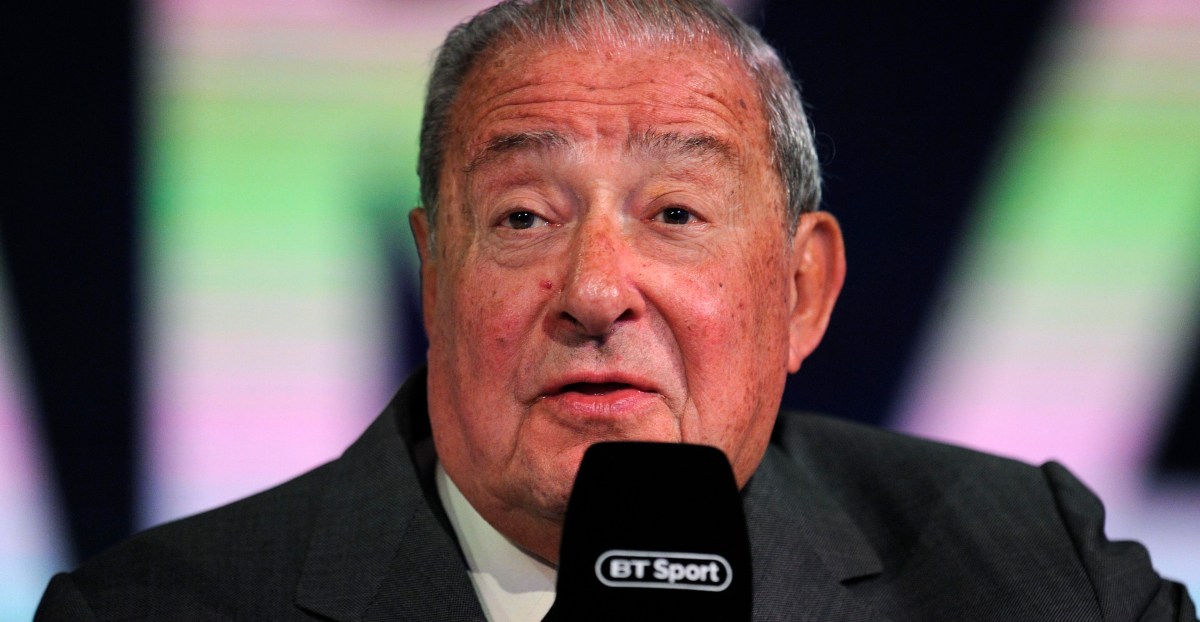
Top Rank promoter Bob Arum is back on the scene with a new knee! And now that he’s getting around again, he was able to catch up with Fight Hub TV to give his perspective on what’s been going on in the boxing business as of late, particularly as it pertains to Zuffa Boxing who appear to be in a state of flux. Check out what he had to say below!
Arum on Zuffa’s place in boxing landscape
“When you look at Zuffa, they are hoping to do what they’re doing with Saudi money and the Saudis have poured a lot of money into the sport and for a while were backing Zuffa, so Zuffa felt emboldened to offer big [money] to good fighters like Shakur Stevenson. Now, apparently the Saudis, Turki and Sela have gotten the word from up high in Saudi Arabia, ‘hey, this money is not going to be unlimited, you’ve got to cut down,’ or there’s no money — I don’t know what they’ve told them.
“So the Saudis are clearly pulling back and who knows if they’re going to be involved in boxing after this year. They’ve already, apparently, sold Ring Magazine to DAZN. So, if the Saudi money isn’t there, Zuffa is not going to spend its own money to promote fights because they have announced to their shareholders that they would not do that. And if they start doing it, then they leave themselves open to a major shareholder suit.
“So, again, we have to see what’s going to happen. There’s no animosity, people are doing what they feel is best for them and that’s business. How this all turns out, we’re going to have to see next year and the years after that.”
On whether he thinks Zuffa has done a good job thus far
“What does it mean to have done a good job? If somebody gave me a barrel of money to put on fights, would I be doing a good job? Sure. But anybody would be doing a good job. I mean, give Oscar this kind of money, give Eddie this kind of money.
“So it’s not a question of a good job, the question is can they make matches having a limited budget that is limited by the financial viability of the fight, not what somebody from the outside is pouring into it. That’s doing a big, good job — making it work for them, for the public, for the fighters without the fighters outside help putting in all this money without any way to get it back.”
On Shakur splitting with Zuffa before one fight together
“Once they realized there was no money coming from the Saudis to fund a $15M fight deal, then what do you do? If you can get out of that contract, you get out of it. Did they get out, did it cost them any money to get out? I don’t know. But, again, to pay Shakur $15M…financially it’s not viable. So, it is what it is. And once the Saudis really left the message that they got the word from The Boss that this unlimited tap is going to stop, it was bound to happen.”
On the Shakur vs Devin fight falling apart
“The fight fell apart, but essentially it fell apart is because DAZN had promised [Devin] Haney a certain amount of money, Zuffa had promised Shakur a certain amount of money, and it wasn’t a match because that money didn’t exist in the fight that they would have…Would the fight have justified the money being put up? Because otherwise nobody wants to break their ass doing a fight, promoting a fight, and ending up facing an absolute possibility that you’re going to lose money.”
On his prediction for the business once the Saudi money evaporates
“Looking at the past when this happened, and in boxing it happens all the time, the market then settles and fighters fight for what’s available and we get some very good fights that still go on and life continues. But how it’s going to come out after this, where we had so much money being put into the sport not existing, how is the sport going to continue? It’s going to continue, but how is it going to continue, I don’t know.
“Remember, [Al] Haymon came in when he had that deal with the mutual fund with hundreds of millions of dollars, and all he accomplished was pissing it away. So, again, I have the experience and I’ve been around enough not to say definitively what’s going to happen because I don’t know like nobody else does. I have an idea but again, it’s just an idea and not worth talking about. All I know is that the sport will continue, there will be great fights being made. How everybody will be compensated remains to be seen but that’s in the future.“
On Ryan Garcia saying he’s going to fight Floyd Mayweather for the WBC title
“Will people be interested in it? I don’t know. I know Floyd [Mayweather] needs the money ‘cause he’s pissed away tons of the money that he made. I mean, he blames Haymon for that, he blames this for that, but ultimately I blame him for pissing it away. Will Garcia vs Mayweather generate money? Will it generate enough money to satisfy these guys? I don’t know. I think there will be limited interest in a fight where you have a young guy at the peak of his boxing prowess fighting an old man, which Mayweather has now become.”
On the Eddie Hearn vs Dana White beef over promoting Fury vs AJ, and Hearn insisting White can’t be involved
“Well, that’s right. Eddie [Hearn] is correct. Frank [Warren] and I have a contract with [Tyson] FuryEddie has a contract with [Anthony] Joshua. Dana has a contract with nobody. But if Dana wanted to be involved with the fight, be my guest. I mean, the money is the money. The Saudis are putting up the bulk of the money in that fight. They’ll do a good gate, get back some of it. But again, what do I care? What should anybody care?”





 MMA2 days ago
 Boxing2 days ago
 Boxing2 days ago
 MMA2 days ago
 MMA2 days ago
 Boxing1 day ago
 Boxing1 day ago
 Boxing1 day ago