Boxing
Tommy Hitman Hearns Reflects on His Powerful Knockout Victory Over Barkley

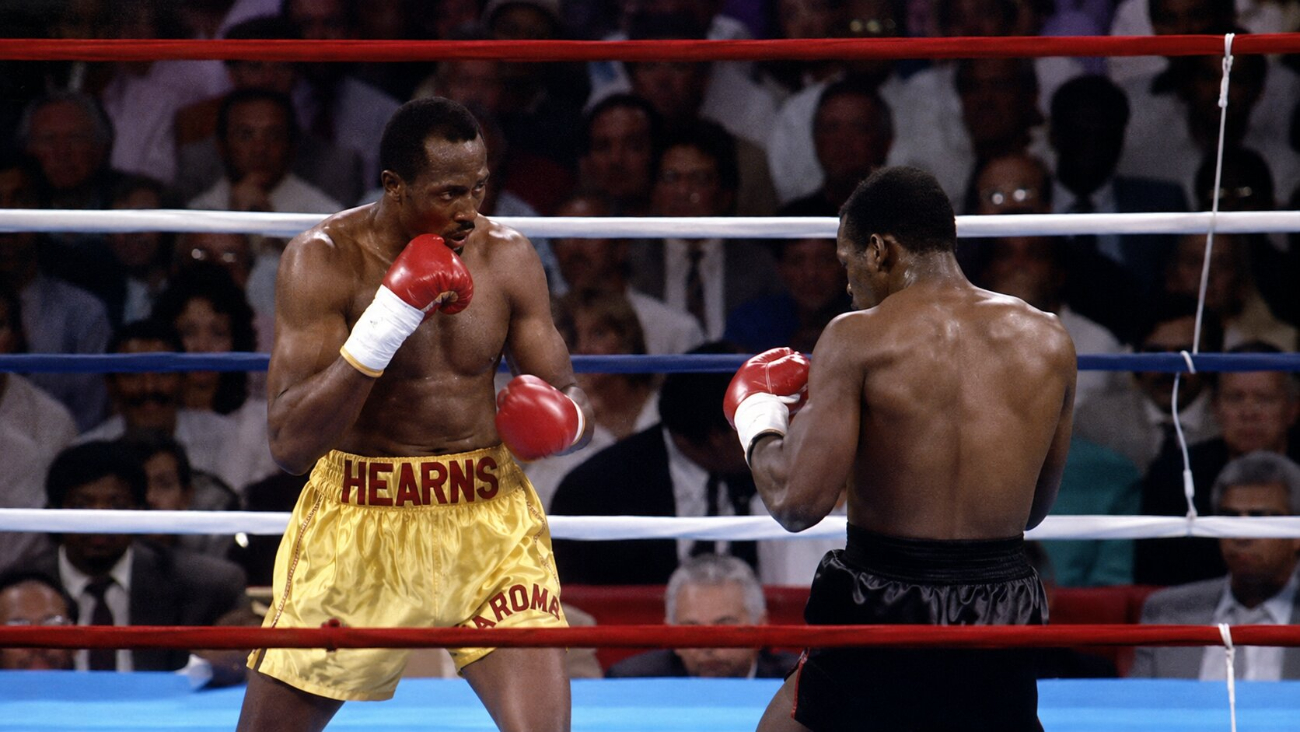


Barkley brought a 24-4 record and little of Hearns’ glamour. The Bronx pressure fighter had already failed in one title bid, losing a 15-round decision to Sumbu Kalambay in 1987. A fifth-round stoppage of Michael Olajide earned him another opportunity, but the 4-1 odds reflected how the public viewed it. Barkley was tough enough to absorb punishment, not skilled enough to defeat Hearns.
Those opening two rounds supported that judgment. Hearns controlled the distance with his long jab, drove right hands through Barkley’s guard, and ripped punches into the body. A cut opened above Barkley’s left eye in the first round. By the end of the second, he had also suffered a cut over his right eye and a laceration on his lower lip.
Each judge had Hearns ahead 20-18. He had landed 52 percent of his 157 punches, compared with 31 percent of 122 for Barkley. Attempting 157 in slightly more than eight minutes also revealed the risk hidden inside his dominance. He was not content to conduct a long-range boxing lesson. He kept stepping within Barkley’s reach to deliver sustained power combinations.
Such aggression ran against the safest strategy available to Hearns. His height, reach, jab, and superior hand speed allowed him to score without accepting equal danger. Once Barkley began bleeding, however, Hearns fought as though a stoppage was waiting to be collected. Instead of using his legs after each attack, he stayed in range to admire his work and reload.
Attacking the body was effective, but it required Hearns to spend more time at midrange. Barkley was being hurt without being physically displaced. Every combination gave him another chance to recognize when Hearns entered, which hand returned slowly, and where the champion moved after finishing.
Although Hearns had carried his power through several divisions, the added muscle did not eliminate defensive habits formed at lighter weights. He often held his lead hand near his waist before snapping the flicker jab upward from an unusual angle. Against shorter welterweights, that style made the jab difficult to read and created a long barrier they had to cross.
At 6-foot-1 and 160 pounds, Barkley was neither markedly shorter nor physically fragile. He possessed the thicker upper body of a natural middleweight, absorbed punches that had overwhelmed smaller opponents, and retained enough strength to throw with full force after taking sustained punishment.
Those injuries increased the urgency. With cuts above both eyes and another on his lip, Barkley could not count on receiving unlimited time. A cautious response would have let Hearns keep widening the lead while the damage worsened. Barkley instead accepted that he might have only a few opportunities left and began searching for one decisive counter.
Hearns’ low lead hand supplied the target. He repeatedly jabbed, lowered his left glove, and moved in the same direction after punching. Barkley started tracking that exit. He did not need to match Hearns’ speed if he could anticipate where the champion’s head would be.
Late in the third, Hearns jabbed and drifted to his left with the lead hand dropping. Barkley did not answer with a standard straight punch. His right hand traveled in an arc over the downward path of Hearns’ glove and entered the blind spot produced by the champion’s upright retreat.
It landed flush and instantly separated Hearns from his legs. Another right sent him flat onto his back.
Although Hearns managed to rise before referee Richard Steele completed the count, standing was not the same as recovering. His legs crossed beneath him, his posture remained unstable, and he could not establish a defensive position. Steele gave him an opportunity to continue because he had beaten the count, then watched Barkley drive him helplessly backward through the ropes.
Stopping the fight at 2:39 of the third round prevented Barkley from landing further unreturned punches. Steele did not need to diagnose what Hearns was seeing. The champion’s equilibrium and inability to protect himself supplied enough evidence.
Offensive control can conceal defensive danger, as the finish demonstrated. Hearns had the faster hands, straighter punches, and greater command of range. His high output magnified the cost of every lapse, while his desire to force a stoppage repeatedly placed him where Barkley’s heavier, looping punches could reach him.
Victory still required exceptional risk tolerance from Barkley. He had to withstand the jab, body shots, and right hands while staying within countering range. Bloodied and falling behind, he recognized one repeated flaw and committed fully to exploiting it.
The Ring named Barkley’s victory its 1988 Upset of the Year. Hearns briefly discussed retirement, then returned to defeat James Kinchen for the inaugural WBO super middleweight title. Barkley lost the WBC belt to Roberto Duran in his first defense the following February.
Four years later, Barkley challenged Hearns for the WBA light-heavyweight championship on March 20, 1992. In the fourth round, he countered a Hearns right hand with a left hook to score the fight’s only knockdown. That moment proved decisive when Barkley earned a split decision after 12 punishing rounds.
Barkley remains the only boxer to defeat Hearns twice. The first victory required him to survive a beating, identify one repeated flaw, and trust that a single right hand could erase everything that had happened before it.
Photo: AI-improved.

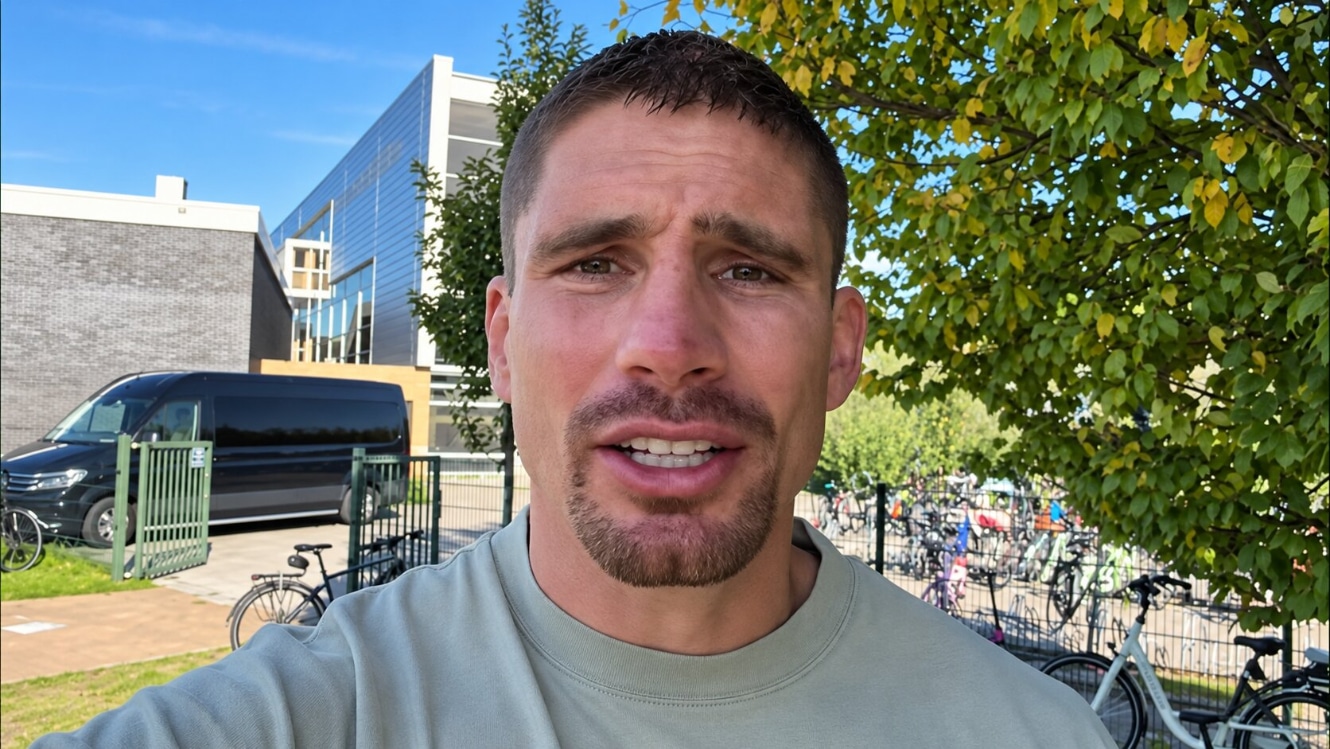
Rico Verhoeven has accepted an offer to fight Deontay Wilder on December 11, potentially adding another heavyweight bout to the Tyson Fury–Anthony Joshua undercard in Cardiff.
Wilder’s response is still outstanding, and the terms need to be negotiated. However, Verhoeven has made his willingness clear as he looks to continue boxing after his stoppage loss to Oleksandr Usyk.
“I can’t confirm just yet,” Verhoeven told talkSPORT. “What I can tell you is that they offered me the fight. They offered me Deontay Wilder. I said yes.”
“The details need to be talked about still. But for that, I’m waiting on a response. So, if there’s a yes from the other side, it’s going to happen.”
Verhoeven did not identify who made the offer. His comments introduce another possible opponent for Wilder, who had been linked with a fight against Jai Opetaia on the same card.
Wilder would give Verhoeven an opportunity to turn the praise he received against Usyk into a victory over an established heavyweight. Going deep into a fight with Usyk earned him attention, but beating Wilder would give him something firmer to build on.
There is an obvious danger in treating Wilder as a faded name to collect. His right hand still gives Verhoeven a reason to be careful. Yet Wilder’s reduced activity and hesitant offense in recent performances could allow the Dutchman time to settle into the fight.
Verhoeven also made clear that he intends to remain in boxing after considering several offers.
“I want to make a statement,” he said. “I want to show that … I am able to transition into the sport of boxing.”
Peter Fury remains in his corner, and Verhoeven is already looking beyond the proposed December appearance. He hopes Joshua beats Fury because he wants that fight himself.
“I hope that Anthony Joshua’s winning that fight because then I’m next for him.”
Beating Wilder would give that ambition a stronger foundation. First, Wilder needs to accept.
Putting Wilder against Verhoeven spares Jai Opetaia a bizarre heavyweight detour that threatened to derail his cruiserweight meeting with David Benavidez. That alone makes it slightly more tolerable than the initial rumor, but it remains a carnival booking.
Wilder has looked completely spent for years. At 40, his trigger is hesitant, his balance is compromised, and the reflex to pull the trigger on his right hand has eroded. Grinding past an aging Derek Chisora by a 12-round split decision did not erase the one-sided beatings he took against Joseph Parker, Fury, or Zhilei Zhang.
Verhoeven, 37, proved his toughness by surviving into the eleventh round against Oleksandr Usyk, but surviving is not contending. He is an elite kickboxer with a tiny boxing resume, still learning basic ring craftsmanship under boxing rules.
Sticking two aging names together with mismatched pedigrees belongs on the preliminary streaming portion of the broadcast, not sharing equal billing right beneath Fury against Joshua. It caters to novelty rather than sport.

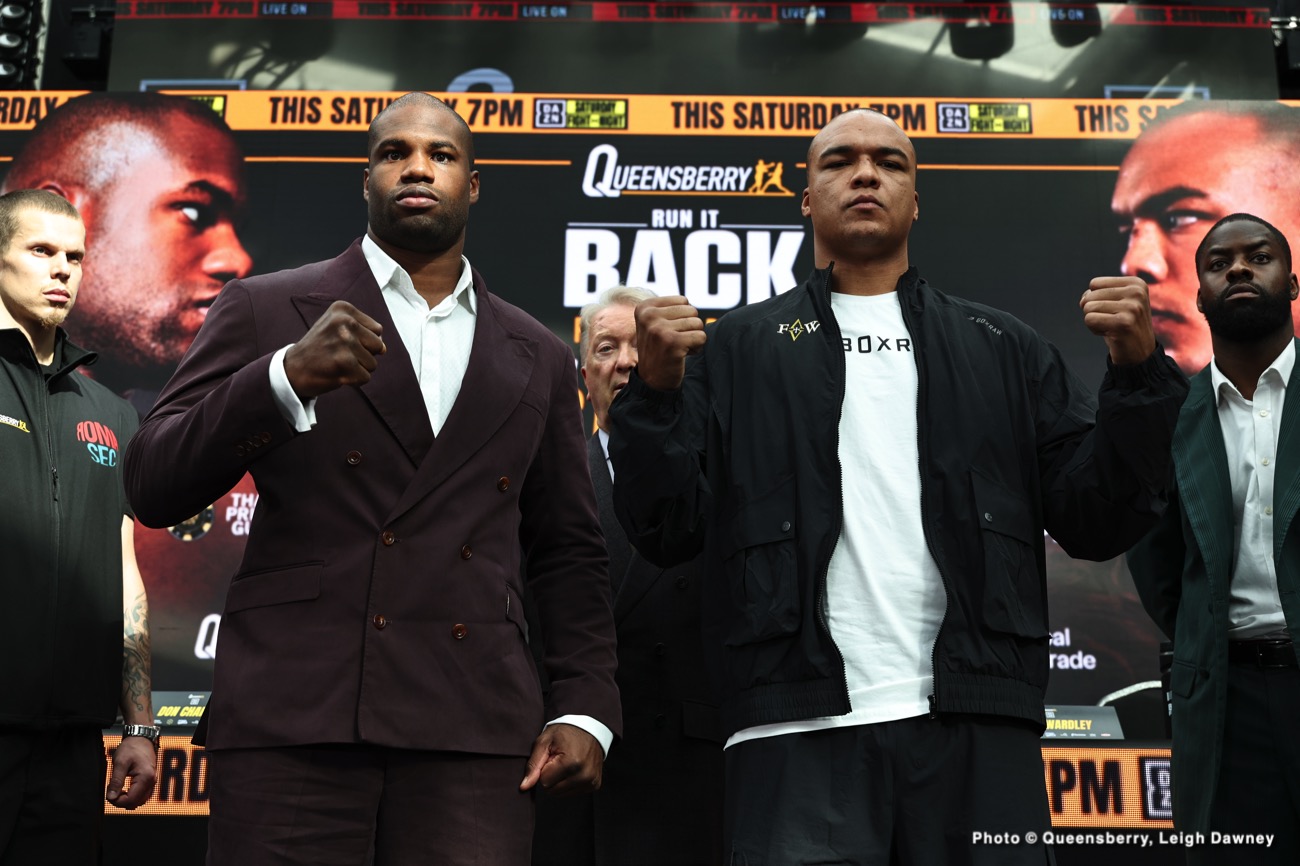
Frank Warren still views Daniel Dubois against Fabio Wardley as a 50-50 fight heading into Saturday night at the O2 Arena in London. Even though Dubois won their violent clash in May, Wardley dropped him in the first and third rounds, proving his power can alter the course of the bout instantly.
Dubois weathered that storm to secure the stoppage, yet those early visits to the canvas give Wardley massive confidence that he can flip the script. The real challenge for Wardley will be finishing the job if he gets Dubois in trouble again.
“I just feel that either of them can win. I think it’s still an even-money fight,” Warren told talkSPORT. “Daniel will go as favorite because he’s probably … got more experience as amateur as well as pro.”
Surviving clean bombs once does not guarantee Dubois can take them a second time. At the same time, reckless aggression could cost either man dearly.
“You’ve got to remember he called for this rematch,” Warren said of Wardley. “It was a brutal fight in May, and here we are now, and it’s on, and he believes that he can win it.”
Warren believes victory hinges on establishing the jab instead of hunting for wild knockout blows right away. For Dubois, a sharp jab keeps Wardley on the outside and stops him from landing cold early.
“For me, the key to this fight is getting behind the jab,” Warren said. “Not looking to lead with big punches, to actually go out and try and … jab and then let your shots go.”
Both heavyweights know what to expect after their first battle. The winner will be the man who made the right adjustments and capitalizes on them first. Neither fighter is built to play it safe, which is why Warren expects another explosive finish before the final bell sounds. Dubois proved his resilience, Wardley proved his firepower, and both step into the ring knowing one clean shot can end it.
When promoters preach boxing fundamentals and patience for a high-profile rematch, they are usually trying to protect their fighters from another grueling brawl. The problem is that fans are paying for fireworks, not a tactical chess match.
“They know each other’s strengths and weaknesses,” Warren said. “It’s who’s learned from the last fight and who can exploit what he’s learned.”
If Dubois and Wardley actually listen to Warren and spend 36 minutes trading cautious jabs from ring center, public reaction will be brutal. Paying premium pay-per-view prices on DAZN just to watch two sluggers neutralize each other behind the lead hand is the exact opposite of what made their May fight thrilling.
“I don’t think the fight’s going to go the distance, whatever happens.”
The thin undercard makes that risk even worse. Here, there is zero safety net. If the headliner devolves into a safety-first sparring session, the whole broadcast will disappoint, and the backlash from paying customers will land squarely on Warren.

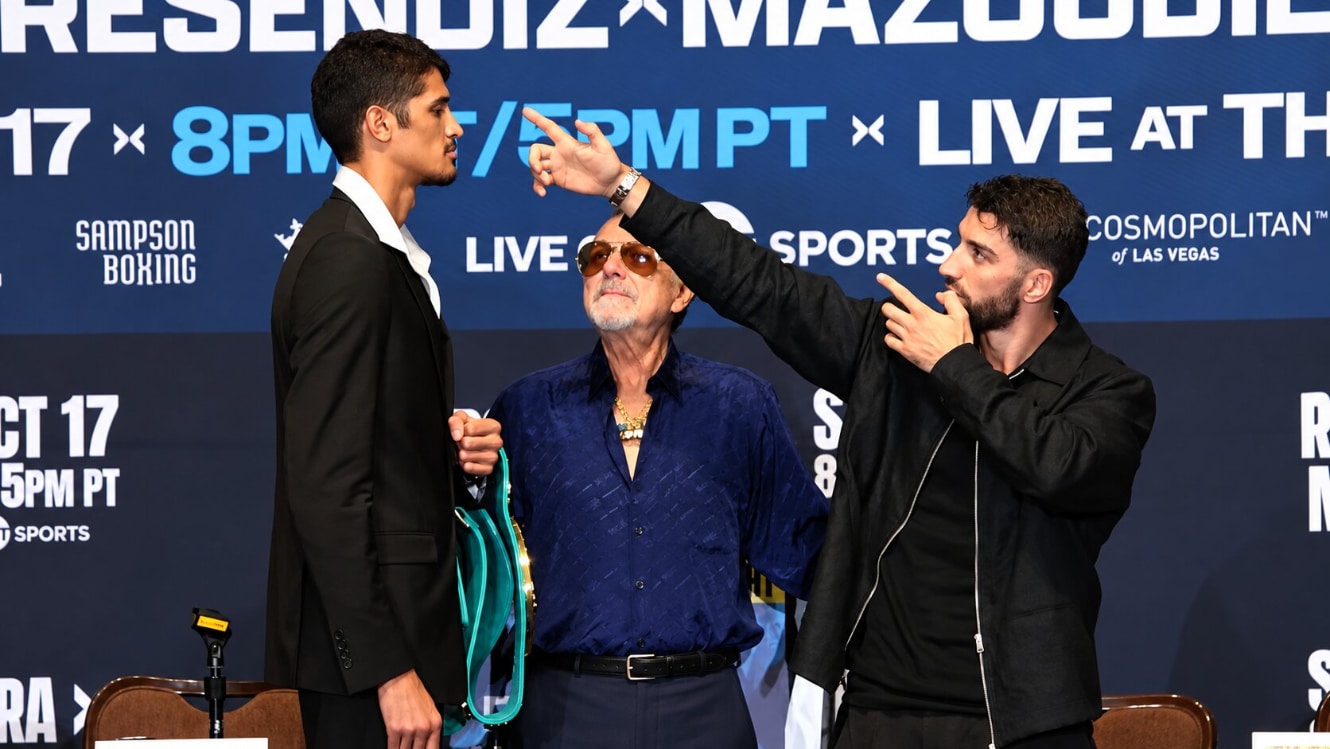
Sebastian Fundora gave Ermal Hadribeaj an icy glare during Thursday’s final presser at The Cosmopolitan of Las Vegas. Tension spiked when Hadribeaj aimed an imaginary sniper rifle directly at the champion’s chin.
Fundora kept his cool. The towering titlist didn’t swat the hand away. He didn’t shove the challenger. He simply stared him down, leaving the theatrics entirely to the Albanian contender.
Many boxing fans dismiss Saturday’s DAZN broadcast as a total mismatch. They might be forgetting history. Brian Mendoza knocked Fundora out cold in 2023. Erickson Lubin battered him. Tim Tszyu landed heavy leather on him. Those past fights prove the champion absorbs massive punishment when his defense gets sloppy.
The height gap between the two southpaws is ridiculous. DAZN’s faceoff clip showed the eight-inch difference clearly. Hadribeaj stands five feet ten inches tall, forcing him to point his fake rifle skyward toward Fundora’s 6’6″ stature.
Landing real leather will prove vastly tougher than gesturing on stage. Hadribeaj has to slip past huge reaching punches. He must escape clean counters. Closing distance against the champion is tricky because Fundora actually loves trading in tight phone booths.
That exact habit offers Hadribeaj his clearest path toward an upset. Fundora constantly surrenders his height by planting his feet inside. Shorter opponents suddenly find themselves in prime position to connect clean shots.
Mendoza exploited that flaw with a brutal left hook. Hadribeaj hasn’t demonstrated that kind of world class power against elite fighters yet. Still, writing off the challenger ignores the defensive gaps Fundora regularly presents.
The champion stayed composed on stage. Bringing that same discipline into Saturday night keeps the challenger outside, preventing Hadribeaj from getting the messy close-quarters brawl he desperately craves.
Hadribeaj’s taunting is unlikely to get Fundora to fight with reckless anger. Fundora has been through heated build-ups before, taken real damage in wars with Lubin and Tszyu, and generally keeps an even temper outside the ring. At the presser, he watched the sniper pantomime without flinching or retaliating.
The interesting part is that Hadribeaj probably does not even need to make Fundora angry to get the fight he wants. Fundora naturally surrenders his eight-inch height advantage without any emotional prompting. His default setting is to march forward, plant his feet, and throw uppercuts and hooks in a phone booth.
He gives up range as a matter of style, not because his temper got the better of him. That was how Mendoza caught him, and that was how Tszyu landed punishing overhand rights before the cut changed the dynamic.
Hadribeaj’s hurdle is what happens when he actually gets inside. Fundora is lethal in close quarters, throwing sharp uppercuts that chew fighters up as they try to stay under his reach. If Hadribeaj spends energy looking for one theatrical, loaded-up counter shot against a guy who throws heavy volume in the pocket, he risks getting overwhelmed by the sheer number of punches coming back at him.


Rico Verhoeven Agrees to Face Deontay Wilder in Epic Heavyweight Clash

Frank Warren Rates Dubois vs Wardley Rematch as an Even Fight

Ermal Hadribeaj Challenges Sebastian Fundora in Anticipated Upset Showdown


-
 Boxing2 days ago
Dana White Rejects November 28 Date for Shakur vs. Haney Fight
-
 Boxing2 days ago
Dana Whites 2026 Promotion of WBC After Rejecting Boxing Bodies in 2025
-
 Boxing1 day ago
Riku Masuda vs Seiya Tsutsumi Rematch Highlights November 29th Title Tripleheader in Tokyo
-
 MMA1 day ago
Alex Pereira backs Paulo Costa to beat Magomed Ankalaev with pressure
-
 Boxing1 day ago
Canelo Alvarez Discusses Challenging Christian Mbilli for WBC Title: Strategies for a Successful Fight
-
 Boxing1 day ago
Shakur Stevenson Faces Criticism for Avoiding All-American Boxing Clash
-
 MMA1 day ago
Dana White dismisses Alex Pereira’s claims against Daniel Cormier: ‘I don’t tell anybody what to say’
-
 Boxing24 hours ago
Jose Valenzuela Overcomes Broadcast Challenges in Pursuit of Schofield