
Boxing
Will Jose Ramirez derail Devin Haney’s plans for Garcia’s rematch?

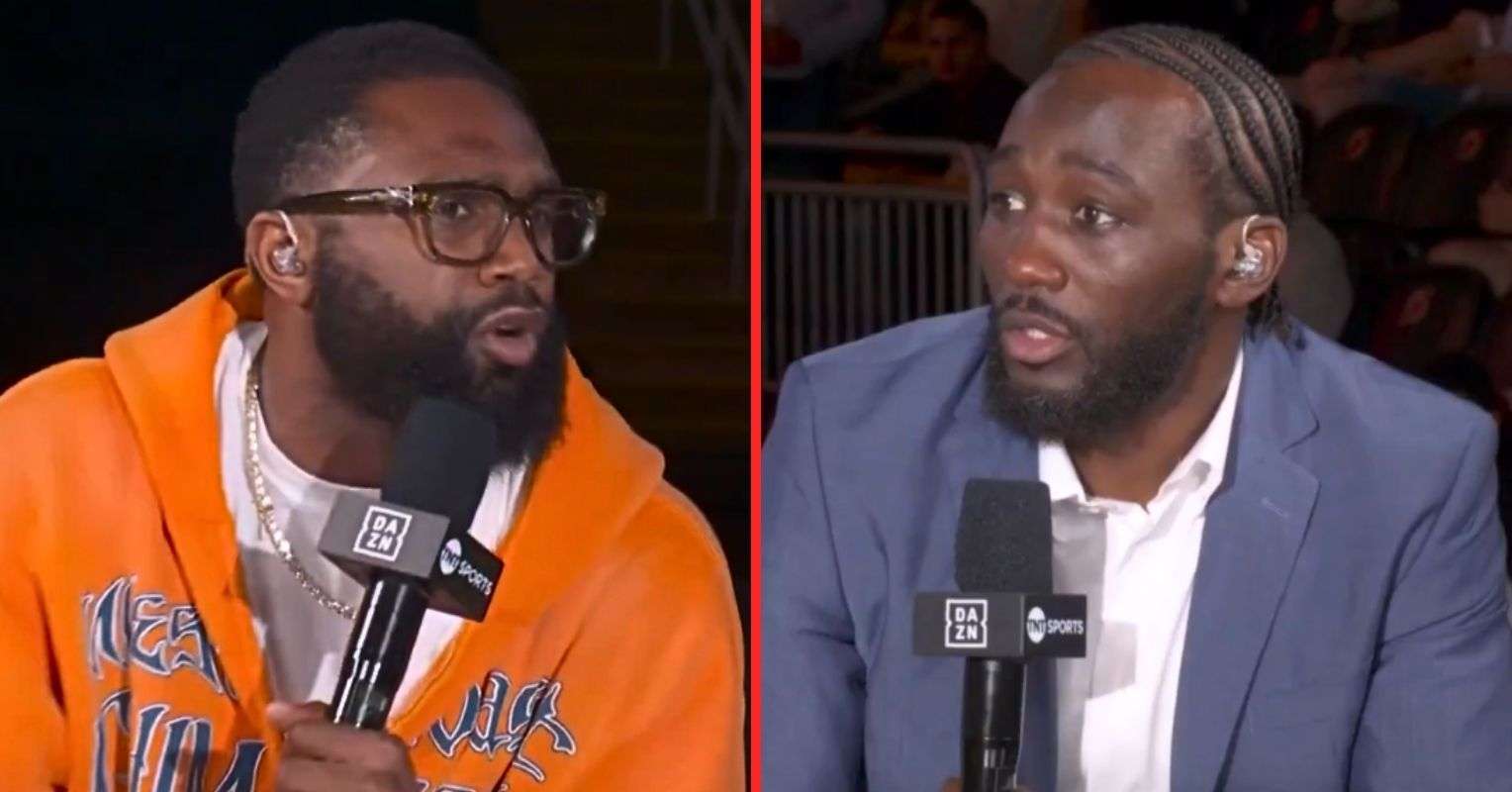


The couch admission reinforces the criticism rather than answering it.
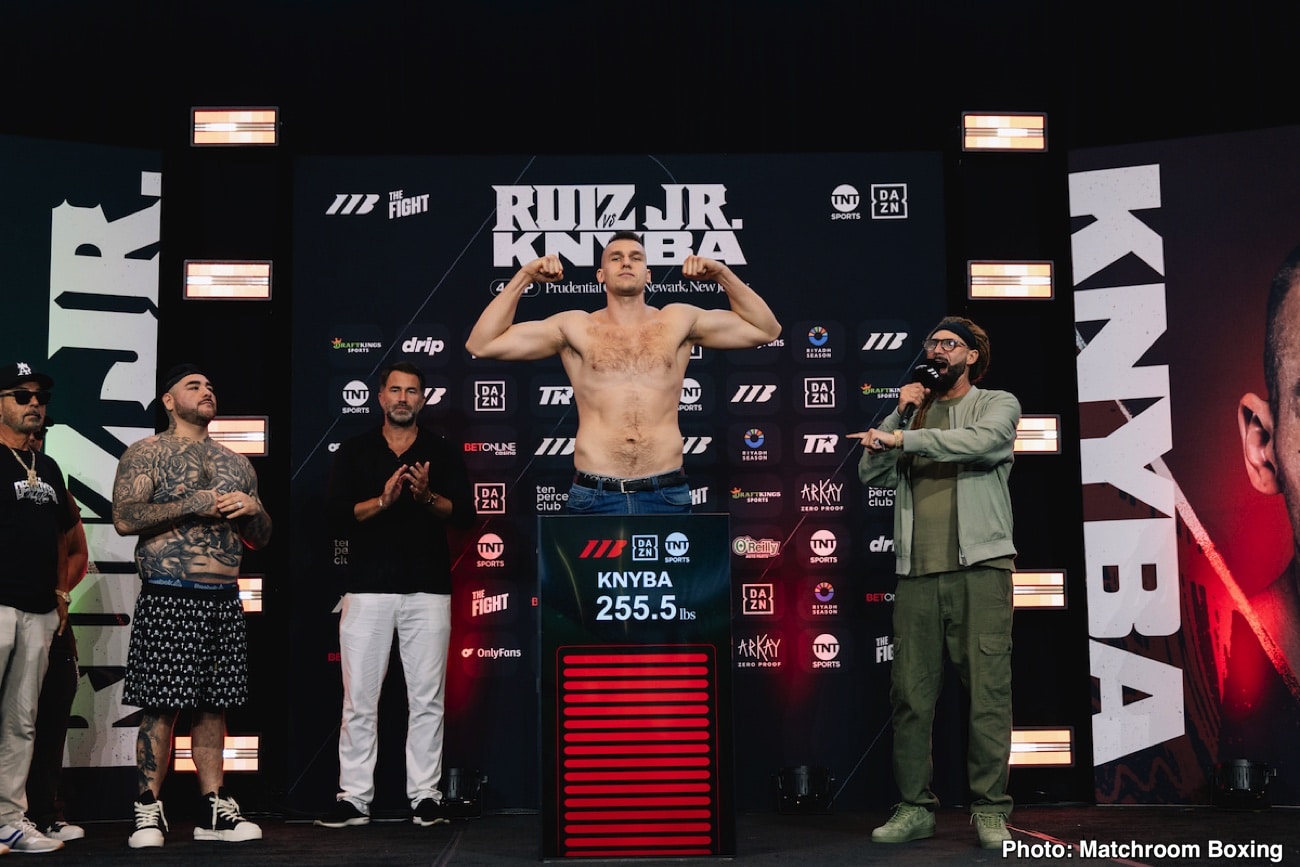
Knyba Can Make Ruiz Look His Age
Knyba lacks elite credentials, but his six-foot-seven frame and 86-inch reach present an awkward test for a short heavyweight returning from more than two years away. A persistent jab, movement, and clinching can prevent Ruiz from reaching the inside, where his hand speed carries the most value.
The former champion should win, particularly because Kabayel exposed Knyba’s difficulty handling sustained pressure. The question is how long Ruiz needs to find his range and how many punches he can produce once the fight extends beyond the early rounds.
The scale provides one encouraging sign. Ruiz was 268 pounds when he stopped Anthony Joshua in June 2019, then ballooned to 283.7 for their rematch. He weighed 274.4 against Jarrell Miller and faded following a fast start. Ruiz came in at 254.3 pounds Thursday, his lightest weight since 2018.
That shows he trained without establishing that his reflexes and conditioning have returned.
Nearly Seven Years Cannot Be Recovered
Since losing the Joshua rematch in December 2019, Ruiz has fought only three times. At 36, the former champion must do more than flatten a carefully selected opponent. He needs frequent fights against progressively stronger heavyweights.
Knyba offers Ruiz activity and confidence, nothing more. Beating him cannot erase nearly seven years of inconsistency or confirm that Ruiz remains among the elite. The real evidence will come later, if Ruiz follows through on his plan to fight again in December.

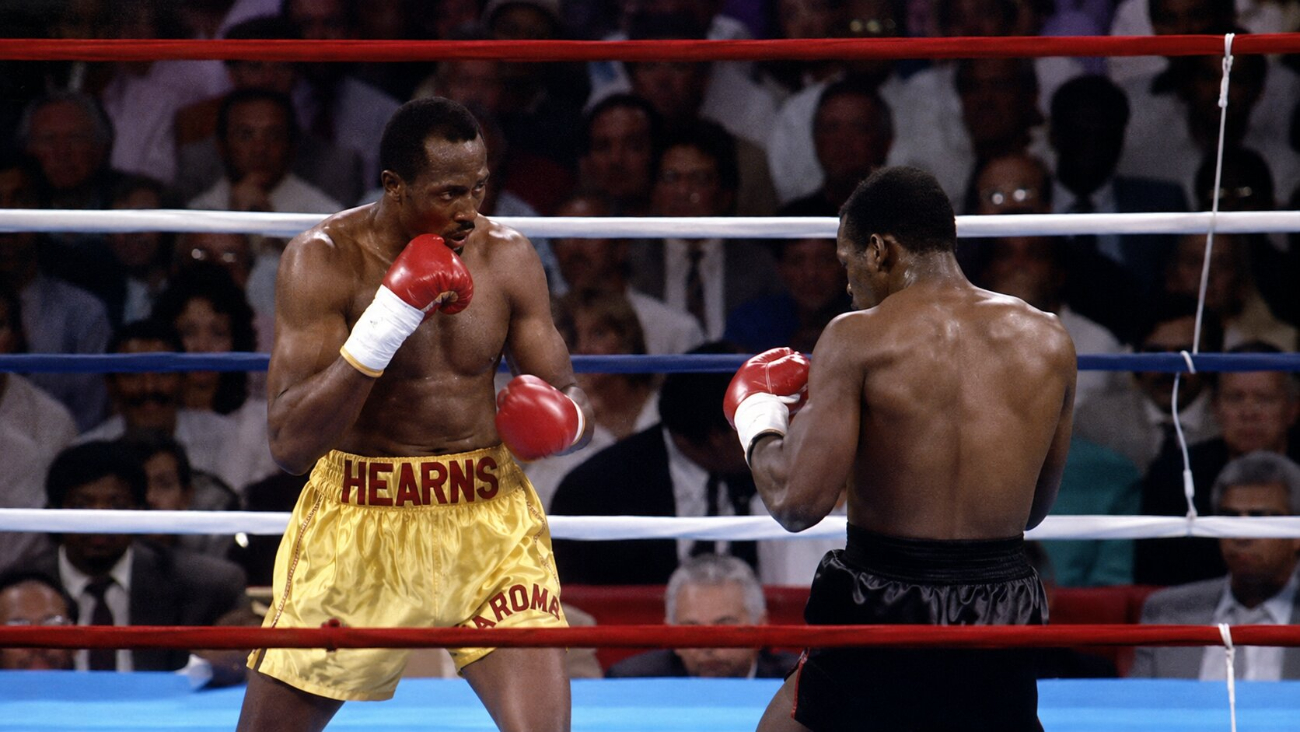


Barkley brought a 24-4 record and little of Hearns’ glamour. The Bronx pressure fighter had already failed in one title bid, losing a 15-round decision to Sumbu Kalambay in 1987. A fifth-round stoppage of Michael Olajide earned him another opportunity, but the 4-1 odds reflected how the public viewed it. Barkley was tough enough to absorb punishment, not skilled enough to defeat Hearns.
Those opening two rounds supported that judgment. Hearns controlled the distance with his long jab, drove right hands through Barkley’s guard, and ripped punches into the body. A cut opened above Barkley’s left eye in the first round. By the end of the second, he had also suffered a cut over his right eye and a laceration on his lower lip.
Each judge had Hearns ahead 20-18. He had landed 52 percent of his 157 punches, compared with 31 percent of 122 for Barkley. Attempting 157 in slightly more than eight minutes also revealed the risk hidden inside his dominance. He was not content to conduct a long-range boxing lesson. He kept stepping within Barkley’s reach to deliver sustained power combinations.
Such aggression ran against the safest strategy available to Hearns. His height, reach, jab, and superior hand speed allowed him to score without accepting equal danger. Once Barkley began bleeding, however, Hearns fought as though a stoppage was waiting to be collected. Instead of using his legs after each attack, he stayed in range to admire his work and reload.
Attacking the body was effective, but it required Hearns to spend more time at midrange. Barkley was being hurt without being physically displaced. Every combination gave him another chance to recognize when Hearns entered, which hand returned slowly, and where the champion moved after finishing.
Although Hearns had carried his power through several divisions, the added muscle did not eliminate defensive habits formed at lighter weights. He often held his lead hand near his waist before snapping the flicker jab upward from an unusual angle. Against shorter welterweights, that style made the jab difficult to read and created a long barrier they had to cross.
At 6-foot-1 and 160 pounds, Barkley was neither markedly shorter nor physically fragile. He possessed the thicker upper body of a natural middleweight, absorbed punches that had overwhelmed smaller opponents, and retained enough strength to throw with full force after taking sustained punishment.
Those injuries increased the urgency. With cuts above both eyes and another on his lip, Barkley could not count on receiving unlimited time. A cautious response would have let Hearns keep widening the lead while the damage worsened. Barkley instead accepted that he might have only a few opportunities left and began searching for one decisive counter.
Hearns’ low lead hand supplied the target. He repeatedly jabbed, lowered his left glove, and moved in the same direction after punching. Barkley started tracking that exit. He did not need to match Hearns’ speed if he could anticipate where the champion’s head would be.
Late in the third, Hearns jabbed and drifted to his left with the lead hand dropping. Barkley did not answer with a standard straight punch. His right hand traveled in an arc over the downward path of Hearns’ glove and entered the blind spot produced by the champion’s upright retreat.
It landed flush and instantly separated Hearns from his legs. Another right sent him flat onto his back.
Although Hearns managed to rise before referee Richard Steele completed the count, standing was not the same as recovering. His legs crossed beneath him, his posture remained unstable, and he could not establish a defensive position. Steele gave him an opportunity to continue because he had beaten the count, then watched Barkley drive him helplessly backward through the ropes.
Stopping the fight at 2:39 of the third round prevented Barkley from landing further unreturned punches. Steele did not need to diagnose what Hearns was seeing. The champion’s equilibrium and inability to protect himself supplied enough evidence.
Offensive control can conceal defensive danger, as the finish demonstrated. Hearns had the faster hands, straighter punches, and greater command of range. His high output magnified the cost of every lapse, while his desire to force a stoppage repeatedly placed him where Barkley’s heavier, looping punches could reach him.
Victory still required exceptional risk tolerance from Barkley. He had to withstand the jab, body shots, and right hands while staying within countering range. Bloodied and falling behind, he recognized one repeated flaw and committed fully to exploiting it.
The Ring named Barkley’s victory its 1988 Upset of the Year. Hearns briefly discussed retirement, then returned to defeat James Kinchen for the inaugural WBO super middleweight title. Barkley lost the WBC belt to Roberto Duran in his first defense the following February.
Four years later, Barkley challenged Hearns for the WBA light-heavyweight championship on March 20, 1992. In the fourth round, he countered a Hearns right hand with a left hook to score the fight’s only knockdown. That moment proved decisive when Barkley earned a split decision after 12 punishing rounds.
Barkley remains the only boxer to defeat Hearns twice. The first victory required him to survive a beating, identify one repeated flaw, and trust that a single right hand could erase everything that had happened before it.
Photo: AI-improved.



Jorge Masvidal credits Kimbo Slice for helping launch his fighting career

Khamzat Chimaev changes course on immediate Sean Strickland rematch

Raul Rosas Jr.’s brother reportedly set for UFC debut at Noche UFC 4


-
 MMA2 days ago
Anthony Wint says gambling addiction was bigger battle than 2 UFC fights
-
 MMA2 days ago
First UFC 334 fight revealed for Madison Square Garden card
-
 Boxing2 days ago
Shakur Stevenson Responds to Rival World Champion Avoidance Accusations: I Make Him Nervous
-
 MMA2 days ago
Chute Boxe’s Diego Lima vows to keep Allan Nascimento’s name alive
-
 Boxing2 days ago
Tyson Fury Reveals Next Opponent Wish, Casts Doubts on Anthony Joshua Showdown
-
 MMA2 days ago
Sean Sharaf calls out UFC over Gable Steveson promotion
-
 MMA2 days ago
Michael Page slams ‘entitlement issues’ among top UFC welterweights
-
 MMA2 days ago
Gregory Rodrigues admits glove grab, denies cheating vs. Anthony Hernandez