
Boxing
Petar Milas, Granit Shala and the referee who lost control


In case anyone is wondering, Timo Habighorst is the name of the referee officiating this fight.
It should be examined immediately.#KabayelKnyba
— MarkusB (@markusbthegoat) January 10, 2026
The first knockdown should be an intervention
At the beginning of the tenth round, Milas dropped Shala. The takedown itself was neat rather than explosive, but the problem was Shala’s reaction. He stood up without his legs under him, his balance was disturbed and his consciousness was dulled. Milas recognized it immediately. Instead of pushing forward, he turned towards judge Timo Habighorst and gestured that Shala was in trouble. Fighters rarely do this, especially heavyweights who sense a break. This signal alone should have prompted closer inspection.
Habighorst conducted a routine count and waved the fight away without any meaningful assessment. No long looks into Shala’s eyes. No pauses to check stability. The judge treated this moment as procedural, not medical.
A few seconds later, Milas stepped in with a tiny, controlled “1-2” punch. Shala fell again. This time the damage was unmistakable. Shala tried to get up by pulling himself up the ropes, his feet were slipping, there was no high guard, and his body was no longer responding in sequence. The signs were no longer subtle.
Referee Timo Habighorst experienced an absolute shock in the fight between Petar Milas and Granit Shala.
He could have stopped it after the first knockdown in the final round. Instead, he allowed Shala to continue and bring out the absolute madness in him rather than stop the fight.
— Anthony Cocks – Australian boxing writer (@el_pollo_loco) January 10, 2026
Ignoring a corner kick removes any remaining defense
As the count continued, Shala’s corner threw in the towel and headed to the ring. This is the final and purest signal in sports. The cornerback gave up responsibility because their man could no longer protect himself. Even then, Habighorst kept counting before finally stopping the fight.
By this point, all the safeguards had failed one by one. The opponent asked for intervention. The number of knockdowns was accumulating. The warrior’s physical condition was obvious. The corner came in. The judge still hesitated.
Milas emerged with a halftime victory and a 20-1 record. Shala left after taking a penalty that served no competitive purpose. The discussion about innings won or lost before ten is only relevant on paper. In the ring, an essential moment occurred when the referee refused to take action, even though all available information pointed in the same direction.
The way Habighorst conducted himself in this fight raised questions about the standards of refereeing and control in the ring. Judges have the license to make quick and uncomfortable decisions to prevent unnecessary harm. When these decisions are repeatedly put on hold, the inevitable question becomes: how does this man continue to be assigned to fights at this level?


By Boxing News 24 Desk – 10/17/2026 – Comments
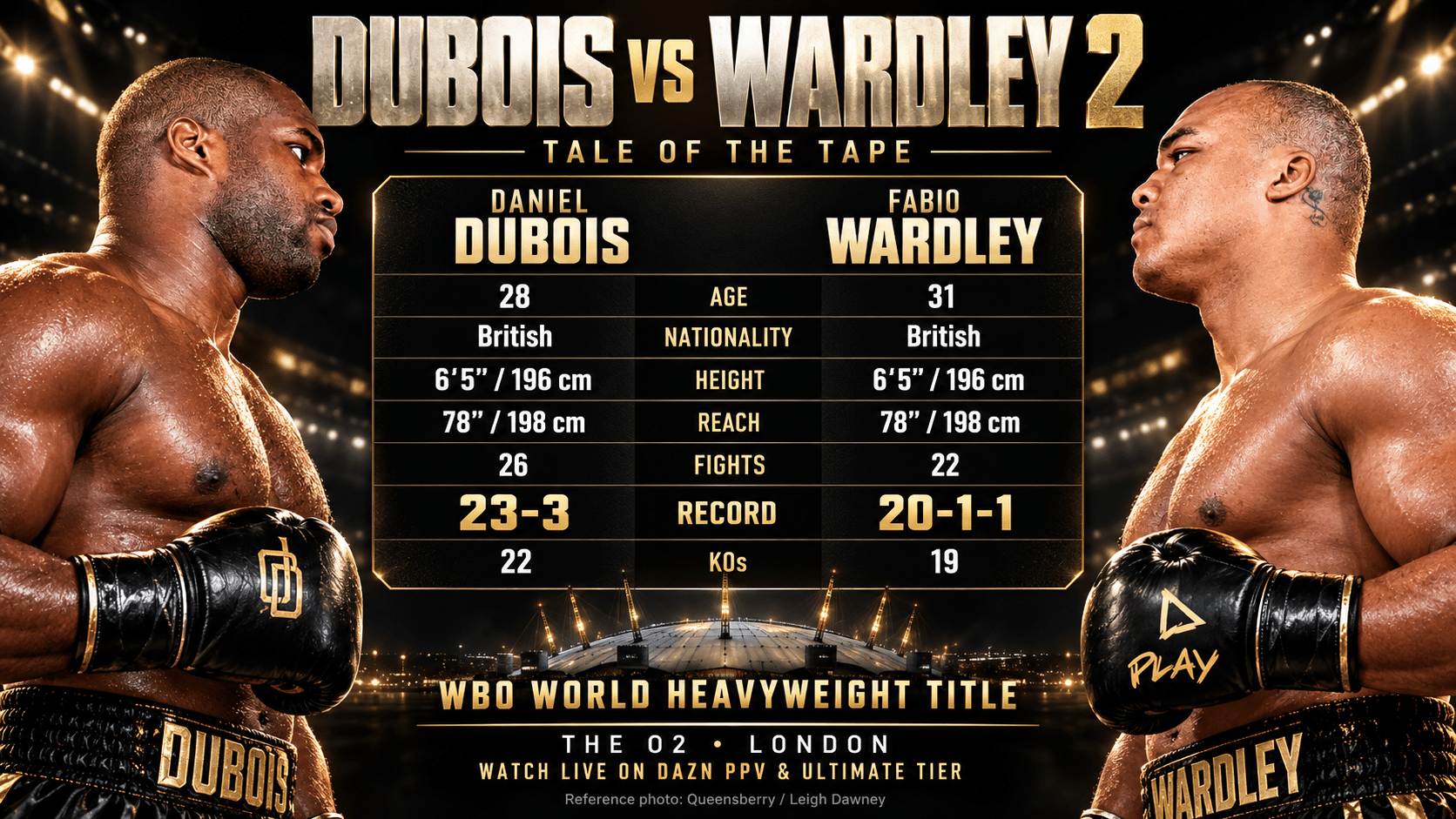
Dubois defends his WBO heavyweight title against Wardley on DAZN PPV at The O2 Arena in London on Saturday, October 17.
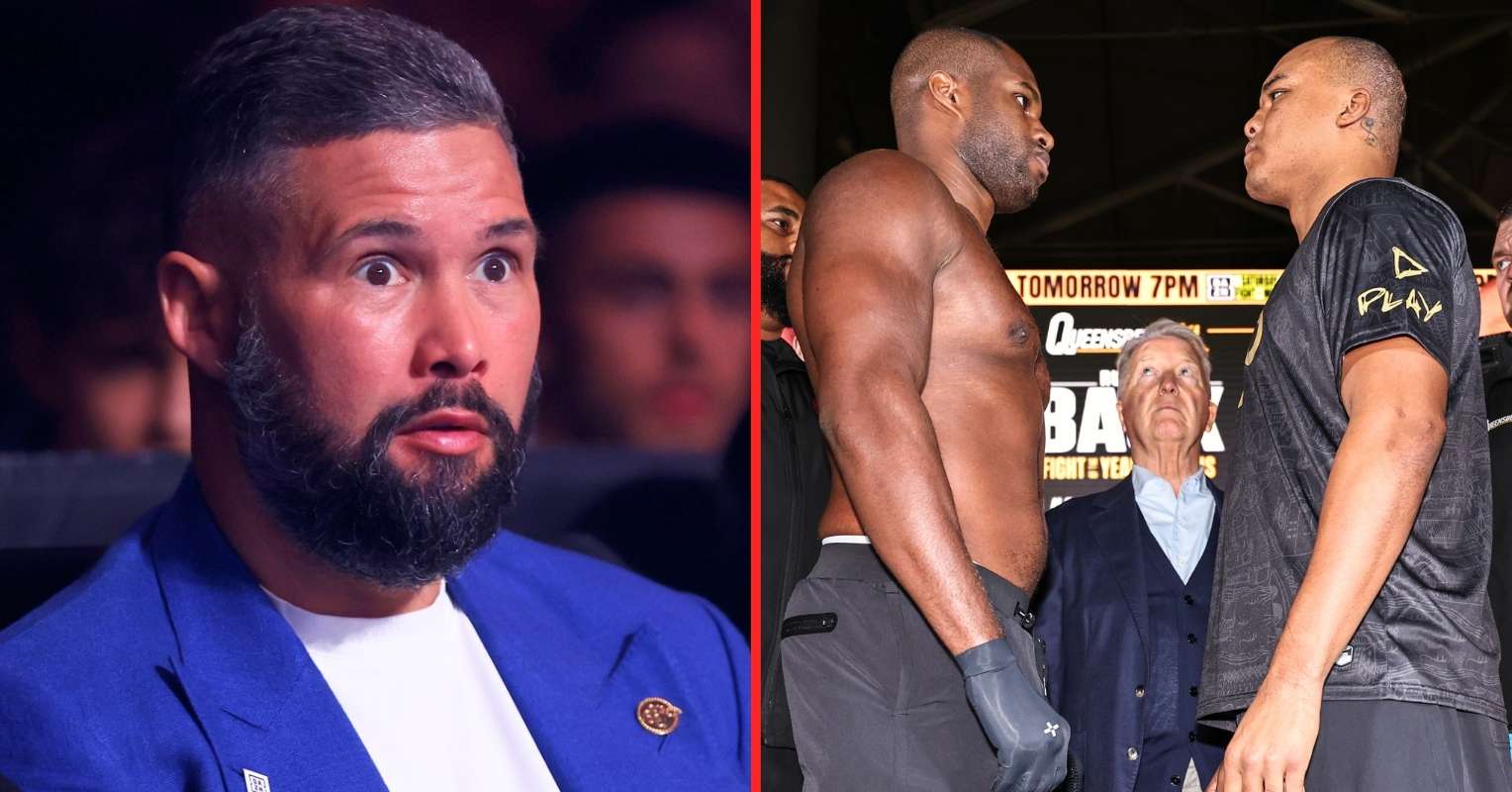
Fabio Wardley gets another crack at Daniel Dubois five months after dropping him twice but losing their first fight. Dubois recovered to stop Wardley in the 11th round in Manchester.
Daniel Dubois vs. Fabio Wardley
2026-10-17 · 14:00 ET / 7:00 PM UK · O2 Arena, London ·  Live on DAZN
Daniel Dubois0
AFTER0ROUNDS
Fabio Wardley0
ROUNDDaniel DuboisFabio Wardley
Wardley returns as the challenger. Dubois makes his first defence against the heavyweight he dethroned in May, with DAZN PPV and DAZN Ultimate Tier carrying the rematch.
Start Time and Ring Walks
Coverage starts at 7 p.m. BST / 2 p.m. ET / 11 a.m. PT.
Dubois and Wardley are expected to make their ring walks at approximately 10:30 pm BST / 5:30 pm ET / 2:30 pm PT. All times fall on Saturday, October 17.
DAZN PPV Price
The standalone PPV costs £24.99 in the UK and $59.99 in the USincluding the undercard and main event.
DAZN Ultimate Tier subscribers receive the event without a separate PPV purchase.

Full Fight Card, Weigh-In Results and Expected Times
Daniel Dubois vs Fabio Wardley
WBO heavyweight title
Dubois: 253.9 lbs (115.17 kg) | Wardley: 248.3 lbs (112.63 kg)
Expected ring walks: 10:30 pm BST / 5:30 pm ET / 2:30 pm PT
Louie O’Doherty vs Michael Gomez Jr.
British and Commonwealth lightweight titles
O’Doherty: 134.12 lbs (60.84 kg) | Gomez Jr.: 134.3 lbs (60.92 kg)
Approximate start: 9:30 pm BST / 4:30 pm ET / 1:30 pm PT
Adam Olaniyan vs Dan Garber
Heavyweight
Olaniyan: 250.15 lbs (113.47 kg) | Garber: 223.15 lbs (101.22 kg)
Approximate start: 9:10 pm BST / 4:10 pm ET / 1:10 pm PT
Bakhodir Jalolov vs Solomon Dacres
Heavyweight
Jalolov: 255.12 lbs (115.72 kg) | Dacres: 242.9 lbs (110.18 kg)
Approximate start: 8:10 pm BST / 3:10 pm ET / 12:10 pm PT
Nelson Birchall vs Levi Gilles
Approximate start: 7:10 pm BST / 2:10 pm ET / 11:10 am PT


About the author
Boxing News 24 Desk
BoxingNews24.com has delivered independent boxing coverage since 2007, including original news, fight analysis, schedules, and results. Our experienced boxing writers cover major fighters and events worldwide, with published content reviewed by editors for accuracy.
Undefeated American light heavyweight Atif Oberlton believes there is plenty more to come after rating his last performance seven out of ten as he prepares to face knockout puncher Deon Nicholson on November 7.
Oberlton improved to 17-0 with a shutout decision over Roamer Alexis Angulo in August, but believes he has another level to reach despite winning every round.
Speaking exclusively to World Boxing News, the Philadelphia southpaw reflected on his victory over Angulo and becoming the first fighter to stop Carlos Gongora earlier this year.
“They said Carlos Gongora was going to be a very tough opponent, and he was one of my toughest challenges thus far. He’d never been stopped, and I was able to get the stoppage pretty early on because I locked in and trained the way I needed to.
“Looking back, I’d rate my performance against Angulo maybe a 7 out of 10—I could have definitely done better. But this camp is different mentally. We had a lot of factors going on last time, but I’m entirely focused now,” he told WBN.
The assessment comes as promoter Dmitriy Salita looks to establish Oberlton as America’s leading light heavyweight.
Oberlton Faces Nicholson
Nicholson enters their November 7 contest in Albuquerque, New Mexico, with 19 knockouts from 23 victories and a reputation for dangerous punching power.
The Alabama fighter was previously linked to a showdown with former undisputed champion Artur Beterbiev, making him another significant test for Oberlton.
“Nicholson is a good opponent—a good dance partner. We’re getting closer to the level of opponents that allow for a standout performance because the challenge keeps stepping up. I definitely don’t take him lightly. I respect everyone who gets in the ring and stands in front of me, but I’m going to go out there and do what I trained to do.”
The ten-round bout at Kiva Auditorium will be Oberlton’s fourth appearance of 2026, with Salita Promotions delivering on its promise to keep the unbeaten contender active.

Salita Promotions Keeps Promise
Oberlton says his relationship with Salita has allowed him to build momentum while continuing to work toward a world title opportunity.
“Salita Promotions told me they were going to keep me busy when I signed, and they’ve kept their end of the bargain. I’m keeping mine by going out there, performing, and winning—whether by early stoppage or decision.
“As long as they keep putting people in front of me, I’m going to keep fighting. Every time I step in the ring, I want to perform better than the last time, climb the ladder, and take some hardware home. I’m ready to take some candy.”
Oberlton has already stopped Joseph George and Gongora in 2026 before proving he could dominate over ten rounds against Angulo.
With 14 knockouts in 17 victories, Oberlton has shown he can finish opponents early and control fights over the distance.
Now, with another training camp behind him and a fourth fight of the year approaching, Oberlton believes his best performances are still ahead of him.
About the Author
Phil Jay is the Editor-in-Chief of World Boxing News (WBN), a BWAA-acknowledged boxing news website founded in 2010. A veteran boxing reporter with 16 years of experience, he has interviewed world champions, broken international exclusives, and reported ringside from major events. His work is published worldwide through WBN and distributed on platforms including Apple News.
Read Phil Jay’s full bio and latest stories.


Daniel Dubois vs. Fabio Wardley Rematch: Live Results and Fight Updates

Atif Oberlton Promises Exciting Future Ahead of Deon Nicholson Match

Tony Bellews Bold KO Prediction for Dubois vs Wardley 2: Yep, I Said It


-
 MMA2 days ago
Jasmine Jasudavicius expects Erin Blanchfield to wrestle 'once she feels these hands' at UFC Edmonton
-
 Boxing2 days ago
Keith Thurman Analyzes Devin Haneys Chances Against Shakur Stevenson in 145lb Catchweight Fight
-
 Boxing2 days ago
Ermal Hadribeaj Challenges Sebastian Fundora in Anticipated Upset Showdown
-
 Boxing2 days ago
Frank Warren Rates Dubois vs Wardley Rematch as an Even Fight
-
 MMA1 day ago
Raoni Barcelos still has no diagnosis after losing consciousness in UFC fight
-
 Boxing1 day ago
Shakur Stevenson Reveals Why Devin Haney Talks Collapsed: Wasted Everybodys Time
-
 MMA2 days ago
Brand Risk 16 Results: West vs. Beasley
-
 Boxing2 days ago
Rico Verhoeven Agrees to Face Deontay Wilder in Epic Heavyweight Clash