

Boxing
Barry McGuigan claims Deontay Wilder’s timing was penniless after Chisora fight

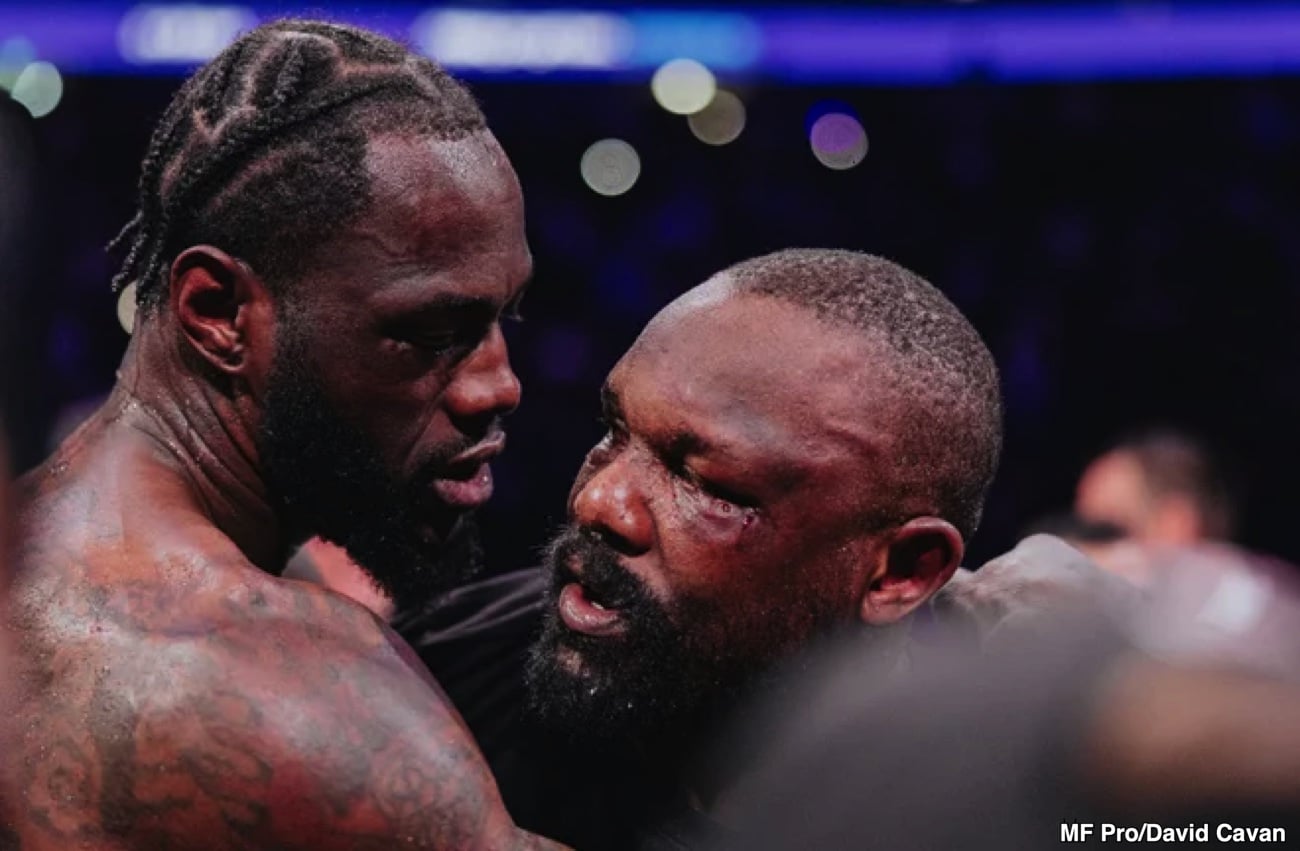

“He’s definitely on a downward spiral. He’s definitely a scorer,” McGuigan told Boxing King Media.
McGuigan noted that Wilder’s power remains intact, but the ability to employ it has eroded. He described a fighter who tries to find distance, misses opportunities and does not finish moments that would have ended the fight quickly.
“The last thing you lose is a punch, but his timing was terrible. He just couldn’t hit Derek,” Barry said of Deontay.
McGuigan makes no mention of Wilder’s two shoulder surgeries that contributed to his failure to finish off his opponents. In baseball, when the shoulder labrum or rotator cuff is injured, the explosive internal rotation required to reach a speed of 98 miles per hour often disappears, forcing the player to become a pitcher rather than a thrower. Wilder is currently going through exactly this painful transformation.
Physical evidence from his recent performances, particularly against Tyrrell Herndon and Derek Chisora, supports this theory that it is a structural mechanical failure and not just a “timing” issue.
Wilder moved away from a laser straight right hand. A straight punch requires full extension and a stable shoulder joint to transfer the power from the legs through the fist.
If the shoulder becomes unstable due to multiple surgeries, the body instinctively protects the joint. Clubbing or looping the punch, using the shoulder as a hinge rather than a piston, is a subconscious way to avoid the keen pain or instability associated with full, snapping extension.
His hesitation to unleash his right hand against Herndon was a huge red flag. For a man whose entire career has been built on “Right Hand Fear,” his reluctance to throw it suggests he no longer trusts the equipment to withstand the torque of a maximum effort shot.
Although Barry McGuigan pointed out timing, timing is often a by-product of physical ability. If hand speed drops by even 10% due to shoulder stiffness, “timing” will no longer work as your opponent has extra milliseconds to intercept the shot.
To compensate for the lost explosive power, Wilder loads more. This makes it predictable. He tries to generate force through effort rather than snapping, which is the boxing equivalent of a pitcher telegraphing a curveball.
If you cannot fully straighten your arm without discomfort, your effective reach decreases. Wilder is missing the shots he usually lands as he sticks low to protect his shoulder.
When a fighter is marked “shot”, it usually means that he has a chin that can no longer withstand the blow, or sluggish legs. In Wilder’s case, it’s a weapon failure. He is a sniper whose scope is cracked and his barrel is warped.
His size and remaining strength can still beat a journeyman into submission, but against the elite who operate in centimeters and milliseconds, losing a 90 mph fastball means the difference between a knockout and a bad call.
Wilder has become a veteran pitcher who relies on grit and garbage, but at heavyweight you finally get a hitter who can play leisurely.

Boxing
Canelo Alvarez Discusses Challenging Christian Mbilli for WBC Title: Strategies for a Successful Fight


Shakur Stevenson Faces Criticism for Avoiding All-American Boxing Clash

Canelo Alvarez Discusses Challenging Christian Mbilli for WBC Title: Strategies for a Successful Fight

Alex Pereira backs Paulo Costa to beat Magomed Ankalaev with pressure


-

 Boxing2 days ago
Nakisa Bidarian Explains the Financial Principles Driving Canelos Commitment
-

 MMA2 days ago
Ismael Bonfim removed from UFC roster after gigantic weight miss
-

 Boxing2 days ago
Tyson Furys Advantage: The Importance of Leg Endurance in Boxing
-
 Boxing2 days ago
Derek Chisora Predicts Early KO in Dubois vs Wardley 2 Following First Fight Canvas Drama
-

 Boxing1 day ago
Agit Kabayel Expected to Defeat Nelson Hysa by TKO in Five Rounds
-

 Boxing1 day ago
Naoya Inoue vs Bam Rodriguez Mega Fight in Jeopardy: Im Not Waiting Sparks Concerns
-

 MMA23 hours ago
Michael ‘Venom’ Page says 3 Misfits fights will pay more than 6 in UFC
-

 Boxing1 day ago
Canelo Alvarez Reveals Top 5 Best Fighters in the World | Boxing News 2023