
Boxing
Sam Langford and the champion who was never allowed


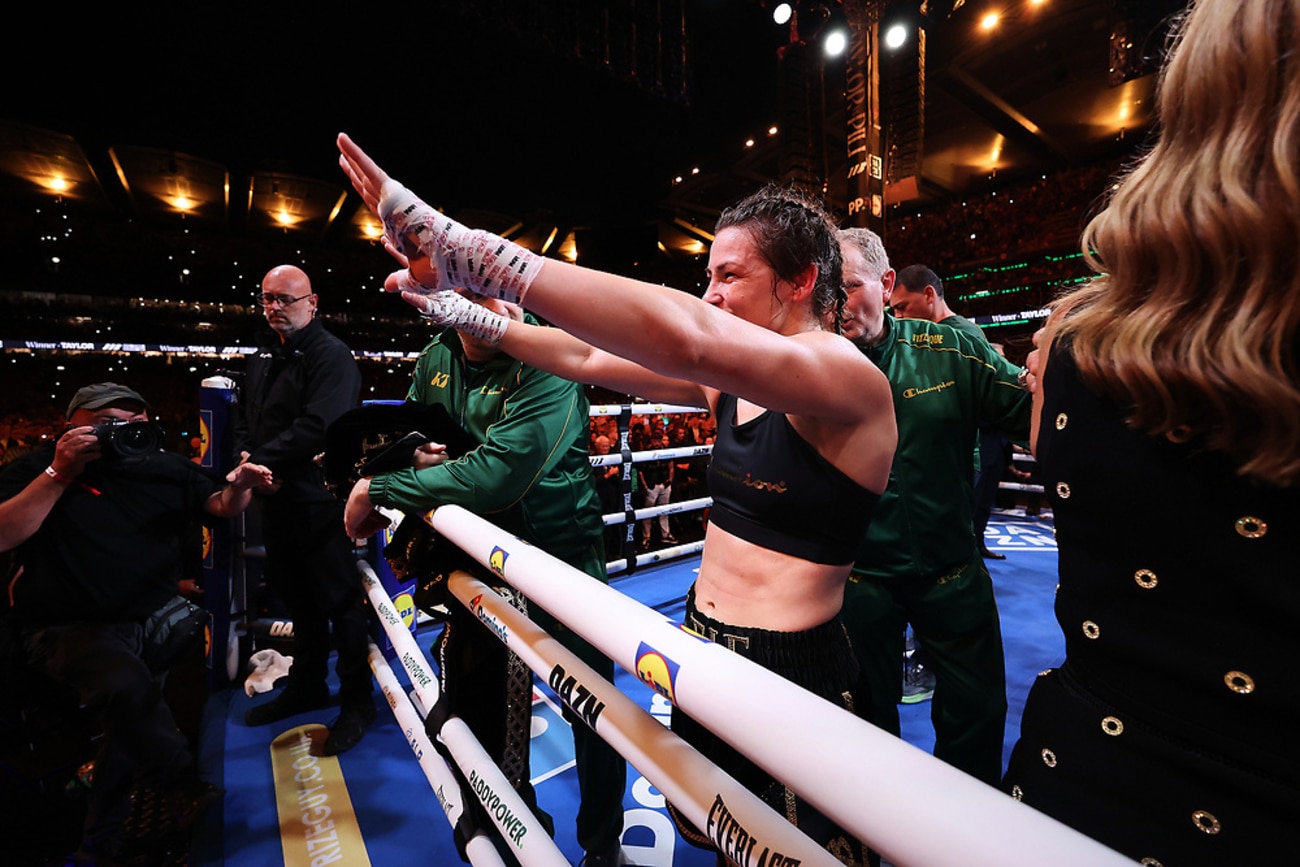


There were no knockdowns and very little suspense on the scorecards. Pili had a couple of decent rounds, but Taylor was too quick, too experienced, and far too accurate for the French challenger.
From the opening bell, Taylor claimed the center of the ring and stalked Pili behind the jab. She followed with right hooks and quick combinations, often landing three or four punches before slipping away from the reply.

The French challenger looked unsure of when to attack. She waited for Taylor to stop punching, but by then the 40-year-old had already changed position and was preparing to come again.
In the third, Pili tried to push forward, but following Taylor around the ring was not the same as trapping her. Taylor kept turning her, touching her with the jab, and forcing another restart.
More pressure came from Pili in the fourth as she tried to drive Taylor to the ropes and keep her there. Taylor answered with counters and short combinations before tying her up whenever the challenger reached close range.
A stiff jab from Pili in the sixth snapped Taylor’s head back and reminded the crowd that the challenger had not come merely to participate. Taylor immediately answered through the middle and landed a counter right hand.
The seventh brought Pili’s best moment when a combination briefly forced Taylor backward. She also found more success crowding the champion and making the exchanges rougher.
Even when the action became untidy, Taylor remained the more accurate fighter. She landed the first clean punch in most exchanges and rarely allowed Pili to finish a combination.
Credit belongs to Pili for staying aggressive and taking Taylor’s punches without folding. Durability alone was never going to win this fight, though, and she lacked the timing needed to make Taylor pay for standing her ground.
Back at long range in the ninth, Taylor picked off Pili with the jab, slipped in the right hand, and mixed punches to the body and head while the challenger continued following her.
There was no backing away from Pili in the final round, but Taylor finished with the quicker hands and cleaner work. The ovation began before the result was announced because everyone inside the stadium already knew who had won.
This was not another exhausting battle like Taylor’s fights with Amanda Serrano or Chantelle Cameron. She did not need drama to prove anything. She boxed with discipline, controlled the distance, and avoided giving Pili the kind of stationary fight that offered the challenger a chance.
The victory added the vacant WBC belt to Taylor’s WBA, IBF, WBO, and Ring titles. It also made her a three-time undisputed champion before she walked away from boxing.
Most fighters stay too long and leave only after the sport makes the decision for them. Taylor left with a 26-1 record, every major belt at 140 pounds, and more than 80,000 people standing to watch her do it.
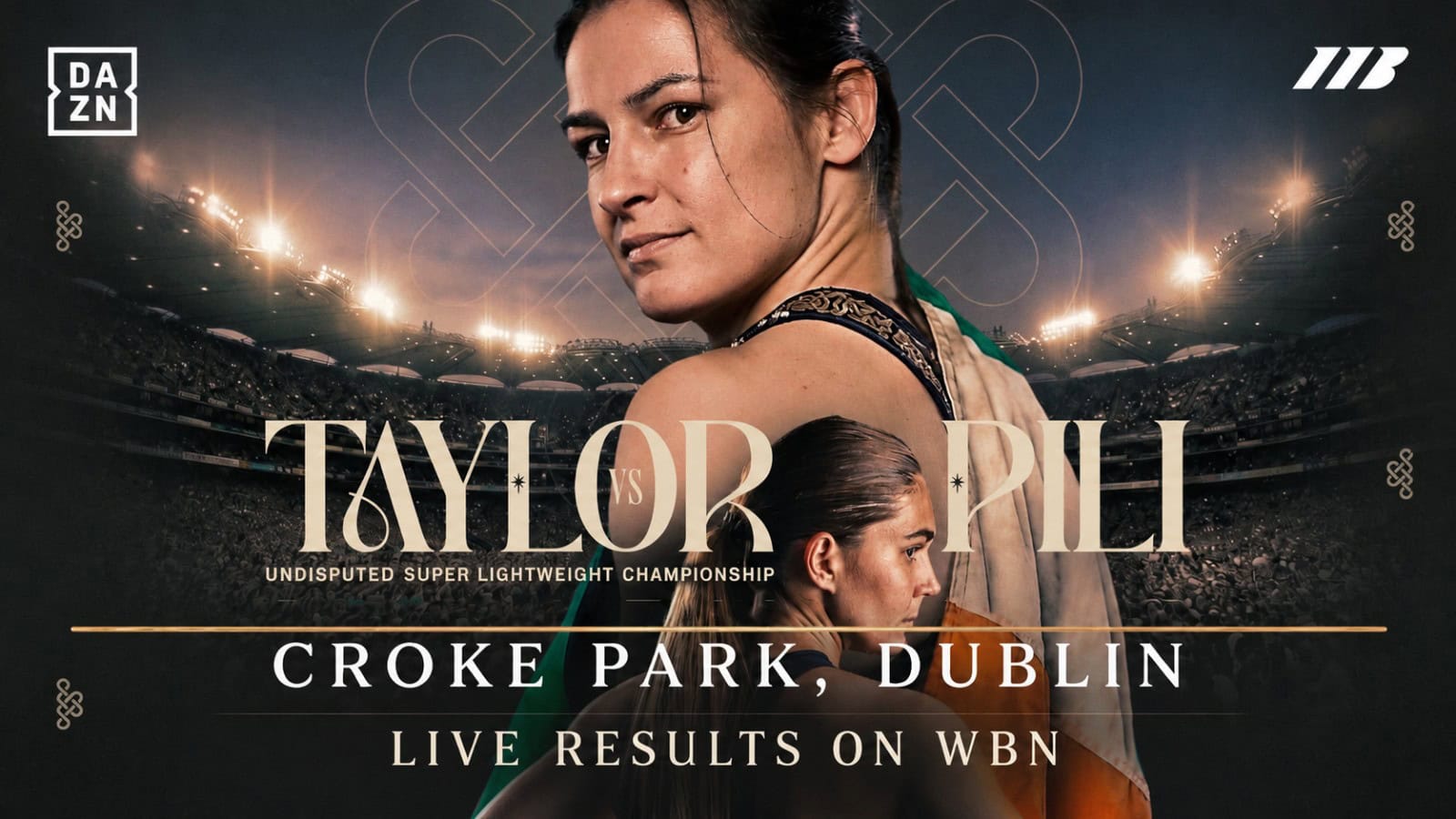
World Boxing News provides undercard results and updates as Katie Taylor faces Flora Pili in a historic homecoming at Croke Park in Dublin.
Taylor puts her IBF, IBO and WBO super lightweight titles on the line against undefeated challenger Pili, with the vacant WBC championship also at stake over ten two-minute rounds.
The card also features an all-Irish welterweight clash between Paddy Donovan and Tyrone McKenna, while David Allen faces Thomas Carty in a ten-round heavyweight contest.
WBN provides live results and updates from every bout as they happen, plus selected scorecards.
Scorecards:
Katie Taylor vs. Flora Pili
Paddy Donovan vs. Tyrone McKenna
David Allen vs. Thomas Carty
Molly McCann vs. Sylwia Doligala
Results
All times are local.
21:01
David Allen vs Thomas Carty ended in a first-round no contest after a horrible ending at Croke Park. Carty fell out of the ring after being caught by a punch to the back of the head and was unable to continue.
The Irish heavyweight received oxygen at ringside before the bout was officially declared a no contest.
20:16
Paddy Donovan scored a fourth-round TKO victory over Tyrone McKenna after a damaging all-Irish battle. McKenna was dropped by a body shot in the second before suffering a nasty gash over his right eyebrow, forcing the contest to be stopped in round four.
19:46
On the first bout of the main televised card, Taylor Bevan scored a sixth-round knockout over Emmet Brennan, ending their all-Irish super middleweight clash emphatically at Croke Park.
18:50
Molly McCann produced a dominant performance at Croke Park, winning all eight rounds on the WBN scorecard to defeat Sylwia Doligala. The former UFC star controlled the contest throughout to move to 5-0 as a professional boxer.
Official scores were 80-72, 80-73 and 79-73 as the Liverpudlian moves closer to a world title shot.
18:01
Joe McGrail stopped Matthew Boreland to claim a regional title and continue his ranks through the super bantamweight ranks. McGrail is now 14-0.
17:22
Bobbi Flood defeated Jack Swallow in an entertaining four-rounder before an announcement was made about the opening fight between Paul Ryan and Paddy Gallagher.
Initially, Gallagher was named as the victor. However, that result was overturned and Ryan was declared the winner 58-55 on points.
17:03
Heavyweight Adam Olaniyan made brutally short work of Matej Hudak, blasting him out inside the opening round to extend his perfect professional record to 4-0 with four stoppages.

TV Coverage
The event is available live on DAZN.
Follow WBN’s live boxing coverage throughout the event.
About the Author
Phil Jay is the Editor-in-Chief of World Boxing News (WBN), a BWAA-acknowledged boxing news website founded in 2010. A veteran boxing reporter with 16 years of experience, he has interviewed world champions, broken international exclusives, and reported ringside from major events. His work is published worldwide through WBN and distributed on platforms including Apple News.
Read Phil Jay’s full bio and latest stories.
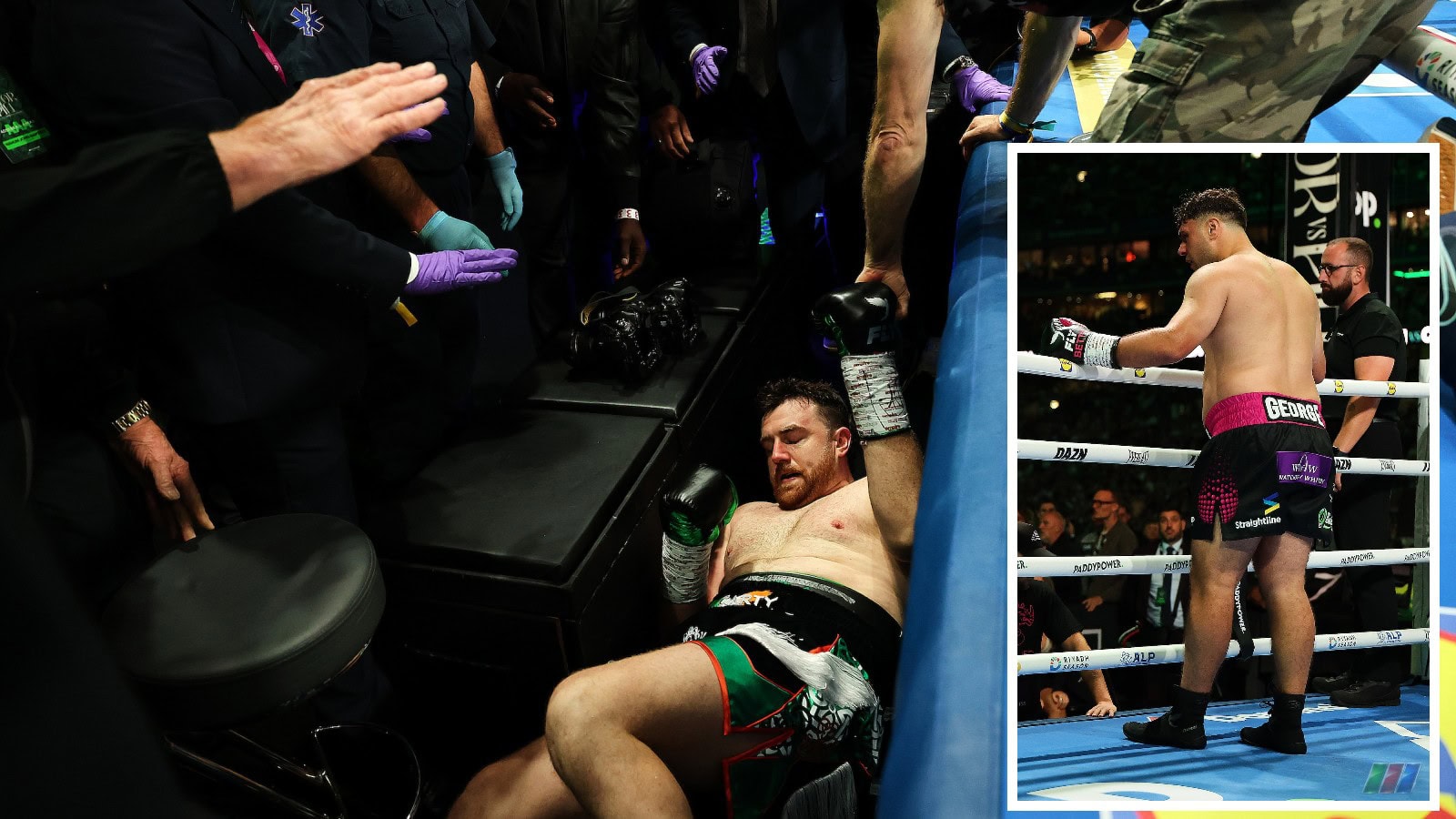
Dave Allen’s heavyweight clash with Thomas Carty ended in bizarre circumstances at Croke Park after the Irishman went through the ropes following a punch to the back of the head.
The highly anticipated heavyweight contest barely had time to get going before Carty ended up outside the ring during the opening round.
Allen immediately appeared to question how Carty had gone through the ropes, stating that his opponent might have dived out of the ring and suggesting it may have been deliberate.
However, replays did show Allen’s punch landing on the back of the Irishman’s head before Carty went through the ropes.
In defense of Allen, the blow did not appear to carry the kind of momentum that would obviously explain Carty going through the ropes at that pace.
Only Carty will be able to explain exactly what happened in those final moments.
Allen-Carty Ends in No Contest
The situation became more concerning once it was clear that Carty was unable to continue, leaving the WBN Scorecard obsolete.
Carty received oxygen at ringside as the contest was abandoned, bringing an ugly and confusing end to a heavyweight fight that had barely begun.
There was then uncertainty over how the bout would officially be recorded.

Eventually, the ringside supervisor instructed announcer David Diamante to confirm that the contest had been declared a no contest in the opening round.
Allen was left without the victory he had traveled to Dublin seeking, while attention immediately turned toward Carty’s condition following the unusual ending.
Croke Park Undercard Results
Paddy Donovan produced one of the strongest performances of the undercard by stopping Tyrone McKenna in four rounds.
Donovan dropped McKenna with a body shot in the second before the punishment eventually resulted in a significant cut over McKenna’s right eyebrow. The contest was halted in round four, handing Donovan the TKO victory.
Taylor Bevan also secured a stoppage, knocking out Emmet Brennan in the sixth round of their all-Irish super middleweight contest.
Former UFC star Molly McCann continued her unbeaten transition into professional boxing with a convincing points victory over Sylwia Doligala.
McCann swept all eight rounds on the WBN scorecardwith the judges returning scores of 80-72, 80-73 and 79-73. The victory improved McCann’s professional record to 5-0.
Joe McGrail remained undefeated by stopping Matthew Boreland, improving his record to 14-0 while adding another regional title to his collection.
Bobbi Flood defeated Jack Swallow over four rounds, while Paul Ryan was eventually confirmed as the winner against Paddy Gallagher after confusion surrounding the original announcement.
Gallagher was initially announced as the victor before the result was corrected, with Ryan officially winning 58-55 on points.
Heavyweight prospect Adam Olaniyan needed only one round to dispose of Matej Hudak. The stoppage improved Olaniyan’s record to 4-0, with all four victories coming inside the distance.
About the Author
Phil Jay is the Editor-in-Chief of World Boxing News (WBN), a BWAA-acknowledged boxing news website founded in 2010. A veteran boxing reporter with 16 years of experience, he has interviewed world champions, broken international exclusives, and reported ringside from major events. His work is published worldwide through WBN and distributed on platforms including Apple News.
Read Phil Jay’s full bio and latest stories.


UFC Paris Post Show: Reaction to Salahdine Parnasse’s quick win over Dan Hooker, and where he goes next

Katie Taylor Retires Unbeaten, Claiming Every Belt After Victory Over Flora Pili

Pros react after Salahdine Parnasse stops Dan Hooker at UFC Paris


-
 MMA2 days ago
Shannon Clark vs. Lucero Acosta booked for PFL Chicago on Oct. 16
-
 MMA2 days ago
Morning Report | Henry Cejudo: ‘The PFL is finished’ if they don’t re-sign Usman Nurmagomedov
-
 MMA2 days ago
Tom Aspinall’s UFC return hits medical roadblock due to eye injury
-
 MMA2 days ago
UFC Paris weigh-in results: Salahdine Parnasse official for debut duel with Dan Hooker
-
 MMA1 day ago
Jason Jackson says UFC doesnt want him disrupting Islam Makhachevs division
-
 MMA1 day ago
Dana White says fans will lose their minds for UFC Hawaii
-
 Boxing1 day ago
Why Damian Knybas Claims Fail to Prove Andy Ruizs Comeback
-
 MMA1 day ago
Tyson Fury says he’ll move on from Anthony Joshua after latest stalemate