Connect with us

Boxing

John Fury vs. Tyson Fury: A family divided by return

Published

on

h1>

Boxing’s most notable father-son vigorous has been broken down in the public eye. John Fury, the volcanic patriarch who has been as much a part of Tyson Fury’s career as any trainer or promoter, has made it clear that he does not support his son returning to the ring – and the two men have barely spoken since that decision.

The fight between Tyson Fury (34-2-1, 24 KO) and Arslanbek Makhmudov (21-2, 19 KO) is scheduled to take place on April 11 at Tottenham Hotspur Stadium in London, and the fight will be broadcast live on Netflix. This will be the former two-time WBC heavyweight world champion’s first fight in over 15 months, following consecutive points losses to Oleksandr Usyk. According to Tyson himself, Fury’s entire family was against his return. His father stopped contacting him. His brothers – John Jr., Shane, Hugh, Tommy and Roman – fell hushed. Even his wife Paris broke off communication for a while.

“My dad stopped talking to me for a while. My brothers stopped talking to me, even Paris. They all cut me off,” Fury said. Daily mail. “No one wanted me to come back and make it clear to me… but it’s my decision and my life.”

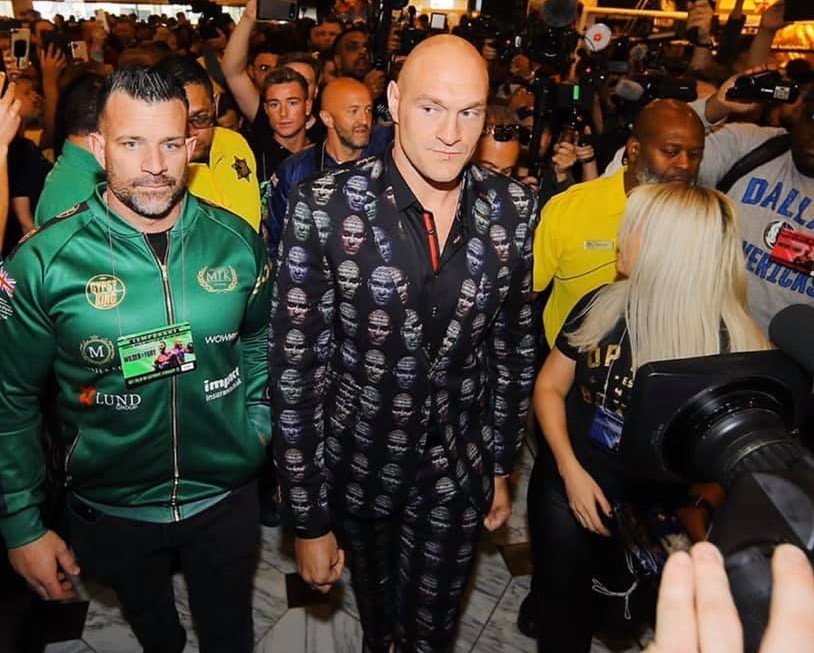
John Fury in public at Makhmudov Presser

The tension did not remain behind closed doors. At the press conference announcing the Makhmudov fight on February 16 at Tottenham Hotspur Stadium, John Fury took the microphone and made his stance impossible to ignore. He described his son as consumed by an identity he could no longer control.

“Tyson Fury got lost somewhere on the road a few years ago,” John said, as reported by the website GB News. “This man is a gypsy king, an artist and a warrior. He devotes himself part-time to his family because it is his love. Boxing is the most critical thing to him. Fighting is the love of his life.”

John described this return as an addiction – not to the substance, but to the spectacle. “All I can say is it’s an addiction. When you’re in the spotlight for so many years, you crave it. The Gypsy King has completely taken over.”

He confirmed that the father-son relationship had deteriorated significantly since plans to return emerged. He said he did not expect to be present at Tyson’s training camp in Thailand. He accused anonymous people around his son of deliberately undermining his influence. “I don’t think he listens to me because of the people around him,” John said. “I just think he’s heard a lot of people talk about me – his father – this, that and the other. People are disrespectful to me. If you hear ‘your father is like this, your father is like that’ enough times, you start to believe it.

The contrast between John’s blunt public criticism and his emotional stake in the outcome was stark. “I love my son. I would do anything for free, but others wouldn’t,” he said. “They want to pay and will never get the best out of him because they are afraid to crack the whip in case he fires them.”

Corner question: a pattern, not a moment

This is not the first time that John Fury has been outside his son’s professional circle at a critical moment. Before Tyson came out of retirement, the corner issue seemed like an unresolved issue from the Usyk era.

Before his rematch with Usyk in December 2024 in Saudi Arabia, Tyson isolated himself at a training camp in Malta and cut off contact with his family for three months. SugarHill head coach Steward confirmed that John would not be in the corner for the rematch: “Just me, Andy Lee and Cutman. That’s pretty much it.”

The decision followed widespread criticism of erratic corner work during Usyk’s first fight in May 2024, with John, Steward and Andy Lee giving instructions simultaneously between rounds. John loudly assured Tyson that he would win – advice that many observers believed contributed to the lack of urgency in the championship rounds. Peter Fury, Tyson’s uncle and former trainer, publicly criticized this setup, claiming there were too many voices and that Steward SugarHill was the only one giving useful instructions throughout the entire stretch. Carl Froch, a member of the International Boxing Hall of Fame, was equally blunt in his assessment of cornerback dysfunction.

Tyson lost the rematch on points. His father was disobedient because of this.

Froch’s explosion: rage as a symptom

If John Fury’s frustration with his son’s return was simmering at the start of the press conference, it boiled over when he spotted Carl Froch working as a studio pundit on the Netflix broadcast. John rushed to Froch’s stand, shouting challenges and accusations. Security intervened. Froch was ultimately pulled from the broadcast during Tyson’s segment, reportedly out of fear that the confrontation would escalate further.

The roots of Froch-Fury hostility run deeper than a single event. Froch has been openly criticizing John on his YouTube channel for years, questioning his role in Tyson’s career and mocking his antics at press conferences. Shane Fury, Tyson’s brother, told Boxing King Media that the outburst was directly linked to Froch’s persistent comments about the family on social media.

Days later, John took to social media to accept Froch’s fight challenge, calling for him to be included on the April 11 fight card. Nothing formal came to fruition, and for good reason – John, 60, fought as a professional 13 times with a record of 8-4-1 and had not competed in a licensed fight since 1995. Froch retired as a four-time super middleweight world champion. However, the spectacle managed to distract attention from the fight being promoted.

It’s strenuous to separate John’s rage at Froch from his broader frustration at being sidelined from the one thing that has defined his public life: his son’s career.

The Netflix factor

The timing of the family breakup couldn’t be more commercially opportune. Season 2 of the Netflix docuseries, which attracted 2.6 million viewers during its first season premiere, will debut on April 12 – the day after the Makhmudov fight. The season trailer released this week shows Paris Fury reacting with evident anger to Tyson’s decision to return, at one point calling him a vulgarity on camera. You can hear John speaking about family matters with characteristic bluntness.

The series has already been renewed for a third season before the second season has even aired. Netflix is ​​streaming the fight. Netflix produces reality shows. The family conflict playing out in tabloid headlines and press conference footage is the same conflict that will drive the show’s narrative. Whether the Furys are aware of it or not – and the family has proven to be very media savvy – the split is cheerful.

None of this makes it any less real.

What does this mean for April 11

Tyson Fury has made his motivation clear. “I’m coming back because I decided so,” he said at a press conference. “I chose boxing because I love boxing. I don’t box because I spent money and I have to risk my health to make a pound.”

However, his father expressed clear concern about the physical risks. “I know in my heart that at 37, 38 he will never be as good as he was five years ago,” John said ProBoxing-Fans.com earlier this year. He openly said he wanted Tyson to protect the long-term health of his seven children.

The question now is not simply whether Tyson Fury can defeat Makhmudov, a risky but circumscribed opponent compared to world-class competition. At issue is whether the most critical person in his boxing life – the man who named him after Mike Tyson, who trained with him and who shouted instructions from the corner of a world title fight – will even be in the building.

John Fury’s opposition to this return is rooted in something more complicated than an argument over player selection or training methods. It’s a father watching his son choose what made him notable over the family that would come after him. Whether Tyson proves his father wrong on April 11 or not, this fight will define this chapter of the Fury saga far more than anything that happens behind the ropes at Tottenham Hotspur Stadium.

Continue Reading
Click to comment

Leave a Reply

Your email address will not be published. Required fields are marked *

Boxing

Prichard Colón Passes Away at 33 After Brave 11-Year Battle

Published

on

"Prichard Colón Passes Away at 33 After Brave 11-Year Battle

Prichard Colón, the former undefeated boxing prospect who became a symbol of hope during an extraordinary fight for life lasting almost eleven years, has died at the age of 33.

Colón’s family confirmed the devastating news on Thursday, bringing an end to a battle that began after the Puerto Rican suffered catastrophic brain injuries following his final professional fight in October 2015.

For World Boxing News, Prichard was never simply another boxer whose tragedy we reported. He was our friend.

Prichard was one of the longer-term friendships WBN struck up with a boxer during the early years of the website, beginning before he had even made his professional debut, and it was Prichard himself who started it.

A Friendship Before His First Fight

On February 13, 2013, ten days before making his professional debut, an unexpected message arrived from the 20-year-old Puerto Rican.

“Hi Phil D. Jay, My name is Prichard Colon im an ex-member of the Puerto Rican Boxing Olympic Team, where i represented my country around the world,” Prichard wrote.

He explained that he was about to turn professional on a Miguel Cotto and Golden Boy Promotions card before making a simple request.

“I was wondering if you could help me with a interview.”

Of course, the answer was yes, and what began as a young boxer trying to get some coverage became a friendship that continued as Prichard’s career took off.

When he moved to 2-0 with two knockouts in March 2013, Prichard was straight back in touch.

“Hey champ, hope your doing well.. Just to let you know i got that W last saturday in the second round 2-0 (2ko),” he wrote.

Over the next two years, there were messages about opponents, fights and possible sponsorship. Prichard sent his Fight Mode videos for WBN to publish, shared photographs and made sure we knew whenever something was happening in his career.

But it wasn’t always about boxing, as there were Christmas and New Year messages and conversations that simply began with Prichard asking how things were going.

He was a fun-loving, outgoing young man chasing one overriding ambition: Prichard wanted to become a world champion.

Elie Saunders

The Night Everything Changed

By October 2015, Colón had built a 16-0 professional record with 13 knockouts when he faced Terrel Williams at EagleBank Arena in Fairfax, Virginia.

The fight became engulfed in controversy over punches to the back of Colón’s head. He complained during the contest, with Williams penalized a point, before Colón was eventually disqualified after his corner mistakenly removed his gloves before the final round.

Nobody knew then how insignificant the result would become.

Colón suffered dizziness and vomiting after returning to his dressing room before being taken to hospital. Doctors discovered bleeding on his brain and performed emergency surgery.

WBN reported that nightfollowing confirmation from his brother Ricardo, that Prichard was in a coma and fighting for his life. He remained in a coma for 221 days.

The boxer we had been communicating with about fights, opponents and his ambitions was suddenly fighting something infinitely bigger than anything he could ever have encountered inside a ring, and that fight would last almost eleven years.

My Final Messages to Prichard

Looking back through my conversations with Prichard now brings home just how abruptly everything changed.

On July 8, 2015, just over three months before his final fight, Prichard checked in as he had done many times before.

“Hey Phil hows everything going.?”

I replied the following morning and asked how he was doing.

“Thats good to hear Phil, i’m doing well training hard for my next fight in August,” Prichard responded.

I didn’t know it then, but they would be the final words Prichard ever sent me.

Three months later, after learning what had happened following the Williams fight, I went back to the same conversation we had been using since before his professional debut.

On October 18, 2015, I wrote: “Thoughts are with you my friend….”

There was no response, and four days later, I tried again.

“Thinking of you and updating everytime I can. Hope to hear from you after your recovery Prichard.”

For almost eleven years, that message remained at the bottom of our conversation, but the reply never came.

Suzanna Teresa

Prichard Became a Symbol of Hope

Prichard’s family refused to give up on him, with his mother, Nieves, dedicating her life to caring for her son, sharing his therapy, his progress and the small victories that became enormous moments for those who followed his recovery.

The boxing community followed with her.

Prichard became far more than a former prospect whose career had been taken away. He became a symbol of hope to thousands of people who watched him continue fighting against circumstances few could comprehend.

The WBC eventually named Prichard an honorary champion and presented him with the world championship belt he had dreamed of winning inside the ring, recognition of a different kind of fighter.

WBN continued covering Prichard throughout those years, from his rehabilitation and medical procedures to the support his family received and the constant attempts to ensure his story never disappeared.

In 2025, WBN even approached Virginia authorities in an attempt to have the only defeat on Prichard’s professional record changed to a no-contest, but the request was denied.

His official record remained 16-1 with 13 knockouts, but it never told anything close to the full story.

WBC | Team Colon

Prichard Colón Cannot Become Another Statistic

Prichard was a shining light to many, and feelings ran incredibly deep within the boxing community over how that devastating night unfolded.

His death shouldn’t become a catalyst for that hatred to be prolonged. The focus now should be on him.

Prichard was a fun-loving, outgoing man who wanted nothing more than to become a world champion boxer.

His tragic circumstances were sadly nothing new in this sport, but writing about Prichard over the years and doing our small part to keep his story alive was a privilege that was never taken lightly.

Abruptly no longer being able to communicate with someone who had become a friend was tough to take, but unfortunately, it’s something boxing writers can be forced to deal with during their careers.

The sport is dangerous and unforgiving, but Prichard Colón cannot become just another statistic.

WBN’s Tribute to Prichard

As our own small tribute, WBN will add Prichard permanently to our Boxers page, an area predominantly reserved for today’s biggest boxing stars and the Hall of Fame legends of the past.

Prichard belongs there, and it’s our own small way of ensuring that the young fighter who contacted WBN before he had even thrown a professional punch remains part of this website long after his fight for life has ended.

Prichard survived the catastrophic injuries he suffered that night in 2015 and battled on for almost eleven more yearswhich perhaps tells us more about the fighter Prichard Colón was than his 16 victories and 13 knockouts ever could.

He never got the opportunity to become the world champion he dreamed of being when that first message arrived in 2013, but he fought like a champion for almost eleven years afterward.

Prichard Colón will never be just another statistic here. He was our friend, and Digget will not be forgotten.


About the Author

Phil Jay is the Editor-in-Chief of World Boxing News (WBN), a BWAA-acknowledged boxing news website founded in 2010. A veteran boxing reporter with 16 years of experience, he has interviewed world champions, broken international exclusives, and reported ringside from major events. His work is published worldwide through WBN and distributed on platforms including Apple News.

Read Phil Jay’s full bio and latest stories.

Continue Reading

Boxing

Floyd Mayweathers Opponent Claims 50-0 Record Should Be Changed – Boxing News

Published

on

"Floyd Mayweather's Opponent Claims '50-0 Record Should Be Changed' - Boxing News"

Floyd Mayweather’s fabled 50-0 record is one of the most notable achievements in the sport this side of the millennium, but one of his former opponents has now declared his belief that he should have got the win over ‘TBE’ and handed him his first defeat.

Mayweather hung up the gloves having never been beaten, despite a career which saw him become a five-division world champion and overcome a plethora of fellow greats, building his brand off the fact that he never suffered a loss.

Despite that, some fight fans argue that Jose Luis Castillo should have got the nod over the Michigander in their initial 2002 encounter, whilst Oscar De La Hoya maintains that he was robbed in his split-decision defeat to Mayweather in 2007.

Now, another of Mayweather’s former foes, Zab Judah, has told All The Smoke Fight that he believes he should have been awarded either a win via disqualification or points when he fought Mayweather in 2006 – a showdown which involved a famous round 10 brawl when Roger Mayweather jumped through the ropes following a low-blow from Judah.

“People say that, the first five rounds, Zab won, you add the knockdown – that is six rounds. It is only 12 rounds in a fight, so if I win six and you win six, the fight is a draw, you know what I am saying?

“Fast-forward, not to jump it up, but if two men are fighting in the ring and anybody else comes in at any time, it is an automatic DQ. So, those are the real situations that happened in the fight that should have been changed.

“However, if we go back and change that, that changes the whole trajectory of Floyd’s ‘TBE’ career, because he is not 50-0 no more.”

Whilst Judah believes that he had done enough to merit at least a draw, the judges’ cards were wide that night at the Thomas & Mack Center, with Glen Hamada awarding Judah with just one round on his 119-109 scorecard.

Continue Reading

Boxing

Usyk vs Wilder: A Clash That Could Redefine Boxings 140-Year Lineal Heavyweight Championship

Published

on

"Usyk vs Wilder: A Clash That Could Redefine Boxing's 140-Year Lineal Heavyweight Championship"

Heavyweight boxing’s lineal championship has survived for more than 140 years, but Oleksandr Usyk’s proposed farewell against Deontay Wilder could leave the historic title facing something more permanent than another vacancy.

From John L. Sullivan through Muhammad Ali, Mike Tyson, Lennox Lewis, Tyson Fury and Usyk, World Boxing News recognizes 40 men as having occupied the position regarded as heavyweight boxing’s ultimate crown.

The principle has always been simple. Beat the man who beat the man and the championship changes hands.

Usyk has vacated his sanctioning body titles and wants Wilder for what he has described as the final fight of his career. If Wilder wins, there is no argument under the traditional lineal principle. He beats the man and becomes the man.

If Usyk wins and retires, boxing could be left trying to rebuild a lineage in a heavyweight division entering an entirely different championship era.

Usyk-Wilder Could Be the End

WBN recently outlined how Wilder could remarkably finish his career as lineal heavyweight champion after appearing close to the end following his brutal knockout defeat to Zhilei Zhang in 2024.

The former WBC champion has never held the lineal crown despite three previous opportunities against Fury. Wilder would become the 41st heavyweight recognized by WBN within a lineage stretching back to Sullivan in 1885.

One right hand against Usyk could change that. A Ukrainian victory creates the more complicated scenario.

Retirements have interrupted the lineage before, but heavyweight boxing has eventually found a way to establish another recognized number one.

This time could be different.

Zuffa Boxing intends to crown its own heavyweight champion, which could even be the Usyk vs Wilder fightand has indicated a willingness to work with boxing’s established sanctioning bodies in some cases. That potentially adds another heavyweight title alongside the WBA, WBC, IBF and WBO championships.

The Ring further complicates the picture.

Can Boxing Create Another Lineal Champion?

The Ring championship has increasingly become associated with the lineal concept because its heavyweight champion is generally regarded as the division’s leading fighter.

Usyk leaves little room for argument. He defeated Anthony Joshua twice, beat Fury twice and remains unbeaten as a professional.

But what happens after he leaves?

What happens if The Ring heavyweight championship remains within Zuffa while another fighter outside the promotion unifies the WBA, WBC, IBF and WBO titles? Which fighter would then be recognized as the man capable of restoring the lineal championship?

The lineal championship cannot simply be handed to whoever holds the most belts. Somebody has to establish themselves as the man.

But who gets that recognition if The Ring and the sanctioning bodies recognize two different heavyweight champions for the foreseeable future?
The lineal championship could almost certainly cease to exist as we now know it.

Boxing has solved that problem before.

Following Lewis’s retirement, The Ring crowned Vitali Klitschko heavyweight champion after his victory over Corrie Sanders in 2004, with WBN recognizing Klitschko as the beginning of a new lineage. Wladimir Klitschko later became the division’s dominant champion before Fury defeated him in 2015.

Fury’s victory eventually led to Usyk, who defeated him twice in 2024.

That lineage now rests with Usyk.

A 140-Year Championship Facing Extinction

The lineal title has never required a sanctioning fee, mandatory challenger or physical belt. It exists because one fighter is recognized as the man at the top of the heavyweight division.

Not everybody has accepted that concept.

Eddie Hearn dismissed it when Fury’s status was being debated in 2018.

“The lineal championship doesn’t actually exist,” Hearn said. “It’s a mythical title that people want to use when they don’t have any belts.”

WBN reported Hearn’s argument at the timebut has continued recognizing and documenting heavyweight boxing’s lineage.

Forty men and more than 140 years provide the history behind that position.

The concern after Usyk is whether an increasingly divided sport will still be capable of producing one heavyweight champion widely recognized above all the others.

If Wilder wins, the problem disappears for now. He beats Usyk and takes the lineage with him.

If Usyk wins, retires and boxing’s competing championship structures continue separating the heavyweight division, the lineal crown could become more than vacant.

It could become extinct.

And if nobody can agree who is entitled to bring it back, whether it’s Zuffa, The Ring or the other sanctioning bodies, Hearn’s old argument may finally have its day.

But once it’s gone, did it really exist anyway?


About the Author

Phil Jay is the Editor-in-Chief of World Boxing News (WBN), a BWAA-acknowledged boxing news website founded in 2010. A veteran boxing reporter with 16 years of experience, he has interviewed world champions, broken international exclusives, and reported ringside from major events. His work is published worldwide through WBN and distributed on platforms including Apple News.

Read Phil Jay’s full bio and latest stories.

Continue Reading
Advertisement

OUR NEWSLETTER

Subscribe Us To Receive Our Latest News Directly In Your Inbox!

We don’t spam! Read our privacy policy for more info.

Trending