Boxing
Boxing’s protected class no longer takes real risks
Published
4 months agoon
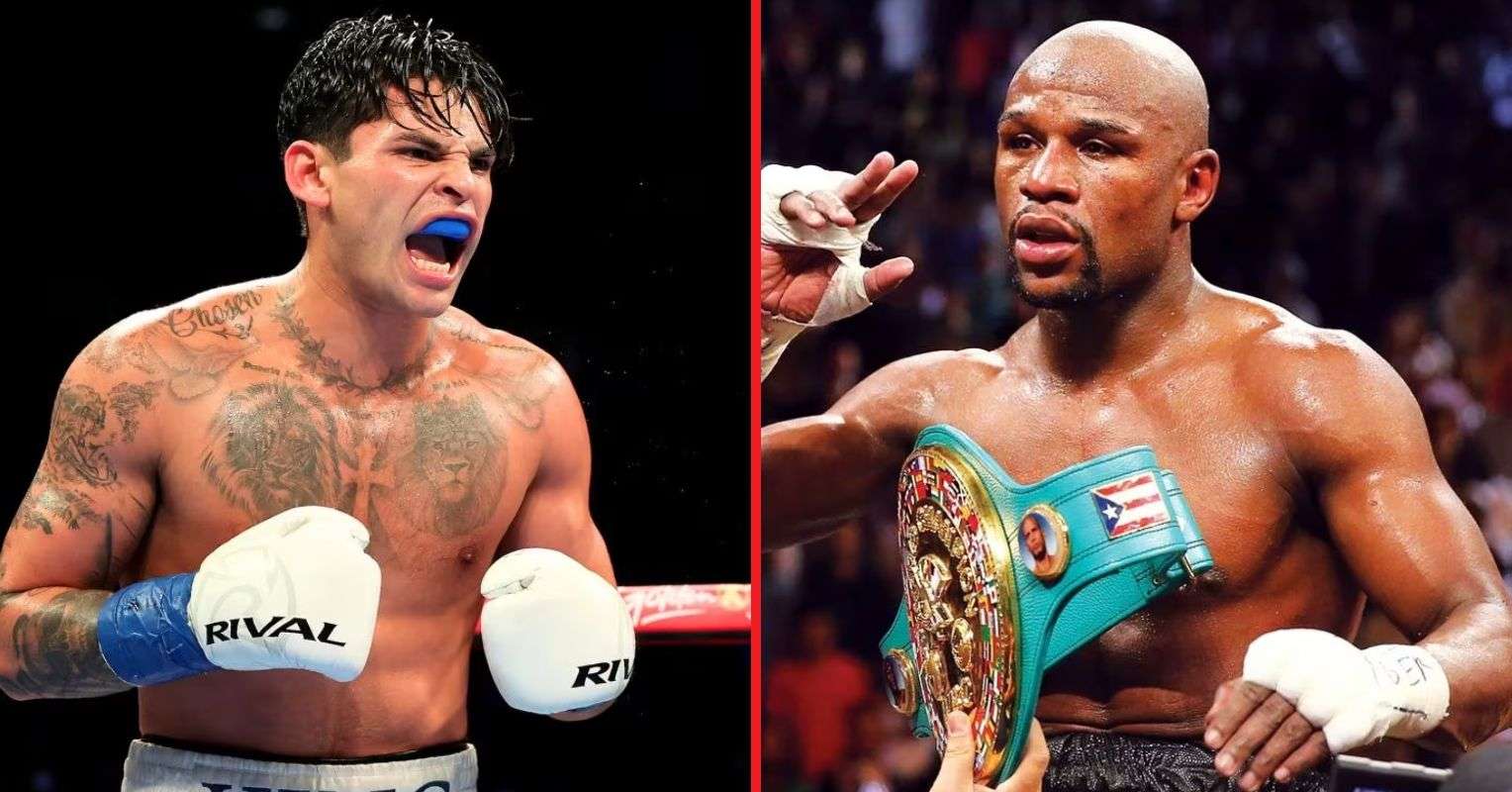
They operate at a protected level – fighters who have stepped outside boxing’s normal risk structure while reaping the benefits of its visibility and rewards. They are no longer pushed forward by the same pressure as the rest of the field and are no longer subject to the same constraints.
This is not a character assessment. It’s about how the system works now.
What separates this group is not talent and fame. It’s freedom of choice. These fighters do not move according to the rankings or divisional dynamics. They decide when to fight, where to fight and under what conditions. The rest of the ecosystem adapts around them.
This breakup didn’t happen immediately. It followed the money.
The power of waiting
Once an athlete reaches a certain financial situation, motivations change. Activity becomes optional. Losing becomes costly in a way that has little to do with pride. Career is no longer about moving forward and starts to be about management.
In moments like these, fights don’t end quickly. They ponderous down. Details start to matter more than opponents. Weight suddenly became something to talk about. Locations become part of the leverage. Time stretches. Nothing is in a hurry, because nothing has to be.
This only happens when the player can afford to wait.
Who still has to take risks
Below this level is the general population of boxing – fighters who do not have the luxury of patience. They cannot wait out the divisions. They can’t wait years for the right opportunity. If they reject a risky fight, someone else will take it. If they disappear, they will be replaced.
Losing still costs fighters at this level, and long periods of inactivity usually push them completely out of the picture.
Protected-level fighters no longer encounter this environment.
Why the divisions stop moving
You don’t have to look far to see the effect. The divisions stop moving. Fights that should have resolved themselves drag on for years. Titles change hands without much explanation. Fleeting lanes seem to fill the space while real questions remain unanswered.
Fans pick up on this quickly, even if they don’t describe it that way. They know when fighting seems necessary and when it is optional. They know when the stakes are real and when they are constructed to attract attention.
Choice as a professional advantage
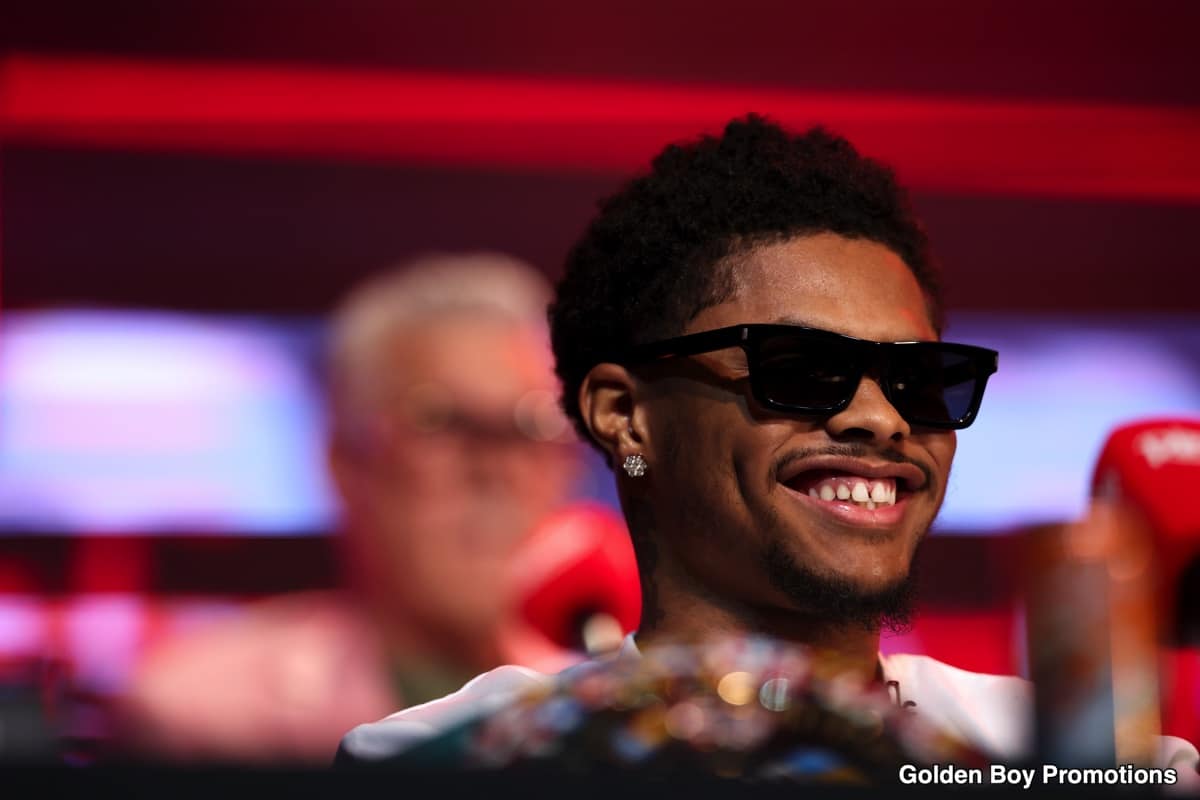
Several of boxing’s biggest names currently operate under such conditions. Fighters like Tyson Fury, Anthony Joshua, Shakur Stevenson and Devin Haney are at different points on the spectrum, but the environment around them is similar. They fight when the conditions suit them. They wait when they don’t.
That doesn’t make them villains. This makes them powerful.
When asked about it, they talk about managing their careers and protecting what they have built. These explanations are not unfair. But they come with a trade-off. The athlete no longer functions in the same conditions as the rest of the sport.
Boxing has never been a fair sport. This resulted in exposure for a long time. Fighters could not avoid challenging situations for long, and separation usually took place in the ring, not at the negotiating table.
This expectation has waned.
It also helps explain why older eras continue to be dragged into the discussion. Fans miss more than just some players. They lack a structure in which elite status had to be repeatedly defended rather than mentioned after the fact.
The protected level often insists that it will eventually fight anyone. But “eventually” is not a competitive principle. This is a holding pattern. It allows troops to remain idle while waiting replaces resolve.
What makes the situation corrosive is the fact that nothing on the surface appears damaged. The rankings still exist. Titles are still awarded. Sports are still transferred to paper. However, the warriors with the greatest influence exist outside the mechanism that is designed to test them.
They don’t spoil boxing. They respond rationally to the stimuli created by boxing itself. The sport has rewarded leverage, branding and patience, and is now enjoying the results.
What boxing has become
Boxing split into two populations operating side by side. There is still a fight to move forward. The other decides when he wants to be seen.
Until this changes, the same frustrations will keep coming back. Huge names circle around each other. Long delays. Fights that seem critical in isolation but never lead to resolution.
The protected class is not killing boxing. But it has diluted his center – replacing competition with control and urgency with negotiation.
The longer this goes on, the harder it is to tell who is still fighting in the sport and who has moved on from it.
You may like
Boxing
Eddie Hearn warns that Zuffa athletes could lose their world title eligibility
Published
2 hours agoon
April 26, 2026
“I think there will be a large split in boxing now,” promoter Matchroom Hearn told the media. “If you go with Zuffa, you’re out of the governing bodies. I think that’s really what it’s going to have to be like.”
Hearn’s comments come at a time when Zuffa Boxing is gaining momentum and gaining attention from fighters and promoters across the sport. The long-term question was whether the events would interact with the WBC, WBA, IBF and WBO systems, or go in a different direction.
Hearn explained his position.
“If you sign with Zuffa, you can’t win the world championship,” he said. “You can’t have it both ways.”
He pointed to the recent movement to include titleholders and challengers, arguing that fighters who leave the customary route are giving up some of what boxing has historically valued most.
“Legacy will always be the answer,” Hearn said.
This line leads to a real fight under the headlines. Zuffa can offer money, platform power and stern promotion via TKO. Time-honored boxing still offers belts, rankings and the story behind becoming a champion.
Many competitors will try to secure both if possible. Hearn is doubtful whether the balance can be maintained.
Hearn also criticized recent arguments against the Ali Act and said income transparency remains one of the strongest protections for combatants in the current US system.
Whether fans agree with Hearn or not, he touched on something real. Boxing may be heading down two separate paths, and fighters will soon have to decide which is more vital.
Dan Ambrose is a boxing journalist at Boxing News 24, respected for his direct analysis and extensive coverage of the global fighting landscape. His reports focus on the most vital fights, division development and the most discussed stories in sports.
Boxing
Moses Itauma is open to fighting the “legend” KO artist who wants to test his beard
Published
4 hours agoon
April 26, 2026
Moses Itauma is willing to face the uncompromising heavyweight veteran after his last fight, a methodical fifth-round stoppage victory over Jermaine Franklin.
The 21-year-old showed his world-class potential last month, scoring a third-round knockout before stopping the typically tough Franklin with a powerful uppercut.
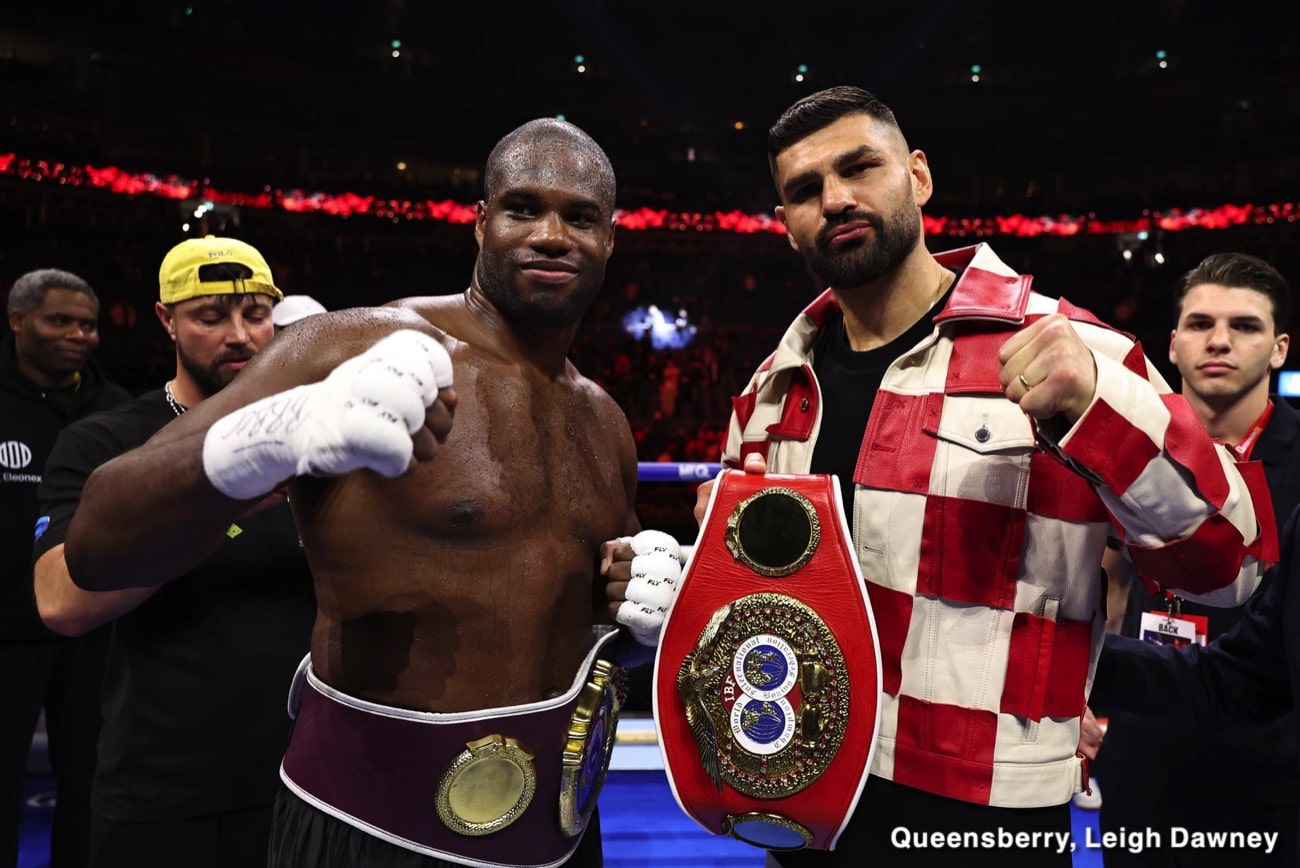
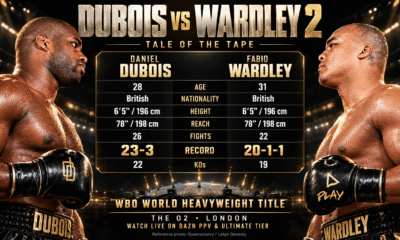
Itauma has since been named mandatory challenger for the WBO title, putting him in pole position to face the winner of the Fabio Wardley vs. Daniel Dubois fight at the Co-op Live Arena in Manchester on May 9.
However, this highly developed talent is ranked No. 1 in the WBA and No. 2 in the WBC, which gives him several options to consider before his next assignment.
WITH Itauma is reportedly expected to return in JulySeveral candidates are already being considered as potential opponents, including the likes of Murat Gassiev and Filip Hrgovic.
As for a potential fight with Deontay Wilder, Itauma said DAZN in preparations for the American’s fight with Derek Chisora, that he would be open to fighting him.
“If he wins, yes. You have to weigh the risk against the reward. What do you get [from fighting] his?
“He is a legend in the sport and I really respect him, but you have to weigh the pros and cons.”
After suffering two knockdowns and beating Chisora by split decision earlier this month, former world champion Wilder is looking for another chance.
I’m talking to ESPNThe 40-year-old said he was not in the mood to avoid potential opponents, including Itauma, who made a huge impression on him against Franklin.
“I’m a heavyweight. All the other characters are heavyweights. Why not? I’m not [dodging] anyone.
“I didn’t know who Moses was, but I saw his last fight with Franklin… What a damn KO. He seems like a potential champion. Why not test him?”
Since their confused encounter, Chisora has demanded an immediate rematch with Wilder, who will likely face an alternate opponent in his next fight.
Boxing
Jared Anderson withdraws from May 9 fight with a torn bicep
Published
6 hours agoon
April 26, 2026
Ring Magazine reports that Anderson withdrew from his fight with Solomon Dacres after suffering a bicep injury. The 10-round heavyweight bout was scheduled for Fabio Wardley vs. Daniel Dubois at the Co-op Live Arena in Manchester.
Anderson (18-1, 15 KO) was looking for another step back after a knockout loss to Martin Bakole in 2024. Instead, the 26-year-old now faces another delay at a bad time in his career.
The fight at Dacres was not a world-class test, but it had value. Anderson needed rounds, activity and a consistent win on a major heavyweight card. Now that’s gone, and the injury gives critics more room to question where his career is headed.
The reaction from boxing fans was fierce, with several responses pointing out Anderson’s injury history and durability. Some questioned whether his body would hold up in the heavyweight division. Others suggested he might have to consider considering the cruiserweight division if physical problems persist.
It may be tough, but it’s the kind of failure that changes the way you view your prospect. Anderson still has talent, but he’s no longer talked about as a pure future heavyweight star. Now he’s trying to prove he can stay vigorous long enough to rebuild.
Moving to Queensberry and fighting in the UK seemed like a desperate attempt to find a novel environment that could boost his confidence. But this bicep injury is a disaster because it adds another year of rust to a psyche that already looked feeble. You won’t rebuild your self-confidence at the gym.
A torn bicep effectively means Jared Anderson’s career will be in frigid storage until the end of 2026. Recovery from this type of surgery usually takes six to nine months before a player can even think about hitting a full-power shot with that hand.
Olly Campbell is a boxing journalist covering this sport since 2014, providing reports from the ring and technical analyzes of the most significant fights. His work focuses on fighter tendencies, tactical adjustments and the details that shape high-level competition.
Eddie Hearn warns that Zuffa athletes could lose their world title eligibility
Moses Itauma is open to fighting the “legend” KO artist who wants to test his beard
Jarred Anderson and Solomon Dacres’ fight was canceled due to injuries
Trending
-
Opinions & Features1 year agoPacquiao vs marquez competition: History of violence
-
MMA1 year agoDmitry Menshikov statement in the February fight
-
Results1 year agoStephen Fulton Jr. becomes world champion in two weight by means of a decision
-
Results1 year agoKeyshawn Davis Ko’s Berinchyk, when Xander Zayas moves to 21-0
-
Video1 year agoFrank Warren on Derek Chisora vs Otto Wallin – ‘I THOUGHT OTTO WOULD GIVE DEREK PROBLEMS!’
-
Analysis1 year agoRobert Garcia discusses the debate on the greatest Mexican warrior in history
-
Video1 year ago‘DEREK CHISORA RETIRE TONIGHT!’ – Anthony Yarde PLEADS for retirement after WALLIN
-
Results1 year agoLive: Catterall vs Barboza results and results card