

Boxing
Boxing adds a second system as the revival bill passes the house

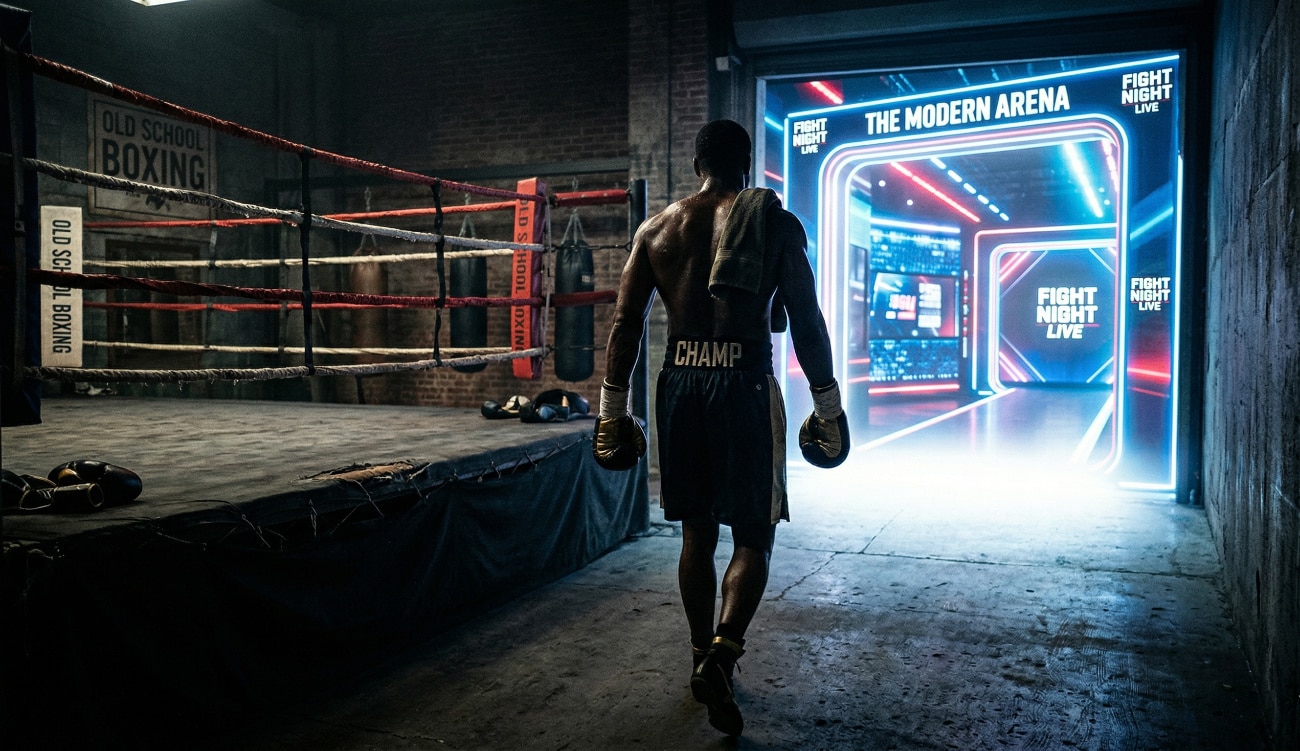

The bill passed the House under suspension, with broad bipartisan support, and now heads to the Senate. If it clears this stage and reaches President Donald Trump’s desk, boxing will move closer to a system in which United Boxing Organizations can exist alongside the time-honored path of a sanctioning body. However, this does not mean that the senior order will disappear. This means that the sport could start operating on two tracks.
What would remain is the familiar version of boxing, in which fighters work through the WBC, WBA, IBF and WBO structures, chasing rankings, mandates and title fights through the usual mix of promoters, networks and sanctioning bodies. The second would give companies the chance to build UFC-style leagues with exclusive contracts, internal titles and their own rankings, which is why the vote changed things.
The simplest mistake is to treat this as a story about boxing finally choosing order over disorder, but that wasn’t the case. Boxing has not resolved its senior dispute. This has opened up a second avenue, while militants can continue to remain in the senior structure if they so choose.
Promoters can continue to work as usual and sanctioning authorities can also continue to operate as usual. The difference is that they are no longer the only recognized route, which puts pressure on everyone.
The door is now open for TKO and Zuffa to build their own structure in boxing, with contracts, rankings and titles operating under one setting, something that has not previously existed in this form.
The rest of the sport remains as it is, with sanctioning bodies still in place, promoters operating as usual and athletes able to continue down the same path but now have another option that sits alongside it rather than replacing it.
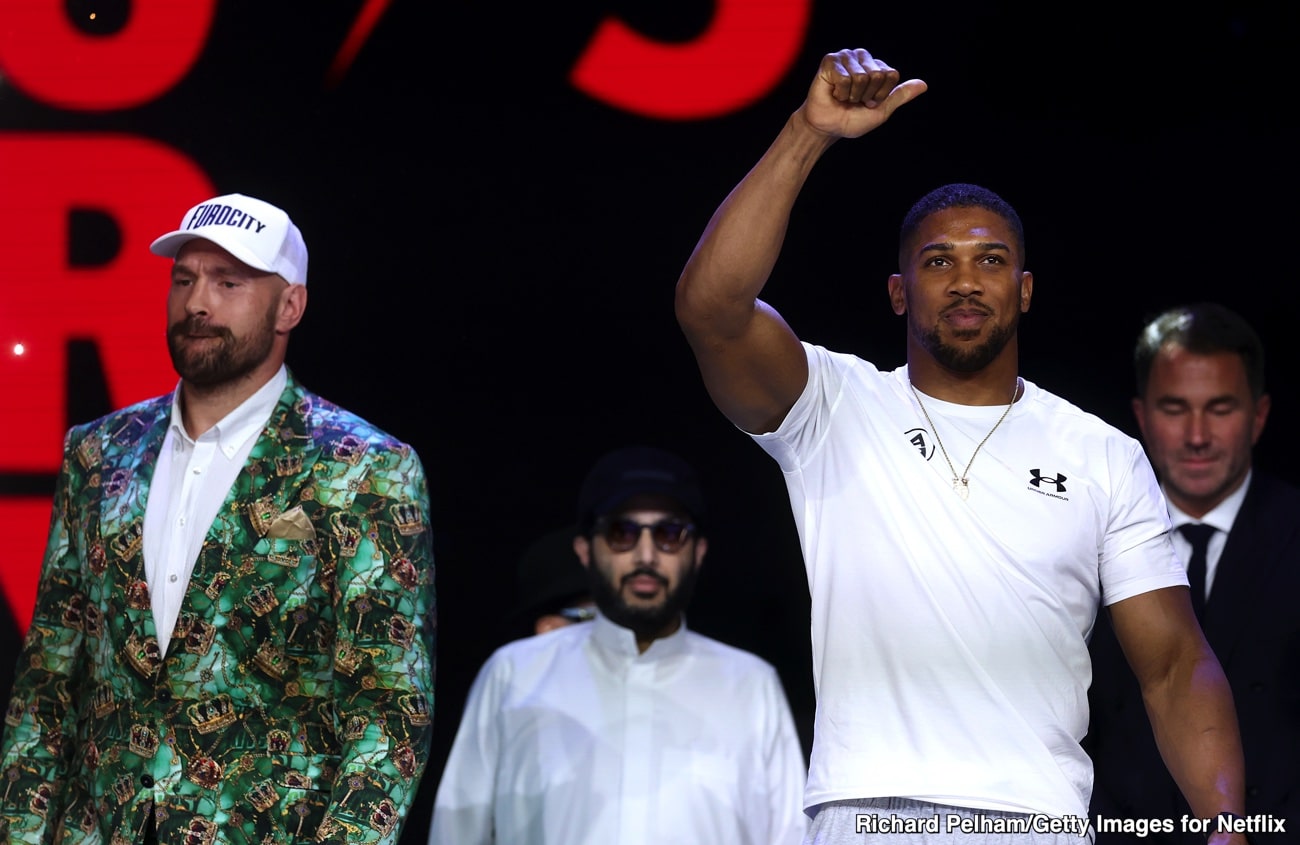
Paulie Malignaggi likes Tyson Fury’s style against Anthony Joshuabut only if the Gypsy King’s legs still hold up to control range. He points out that Joshua must close the distance, yet doubts AJ has the footwork required to get there.
Fury’s movement creates the main problem. If he keeps Joshua following his lead and constantly resets AJ’s rhythm, Joshua risks spending the entire night chasing shadows instead of landing meaningful shots.
“AJ has to obviously get in close,” Malignaggi told Boxing King Media. “It’s not easy against a guy with the footing of Fury, but who knows, maybe Fury’s old legs are a little slower.”
That lingering doubt stops Paulie from locking in a definitive pick. Fury understands how to dictate distance against AJ, but executing that plan across twelve rounds takes functional wheels.
If Fury has lost a step, Joshua gets a direct route into punching range without burning energy on pursuit. AJ does not need sudden speed if Fury can no longer skip away. Joshua simply has to capitalize whenever Fury sits in the pocket.
At the same time, Malignaggi remains skeptical about Joshua’s mobility.
“I think AJ’s feet are a bit cumbersome, though. So, I think the size of the ring and things like that will also matter in the fight.”
A larger ring hands Fury extra space to glide and forces Joshua to cover real estate. A tighter ring gives AJ a clear path to trap his rival, though he must cut off the ring instead of trailing behind.
Paulie’s breakdown hinges entirely on Fury’s mobility. If the legs work, Joshua’s heavy feet could leave him swinging at air. If those legs fade, AJ suddenly finds a manageable target. Malignaggi spots the stylistic edge, but he refuses to assume Fury can still pull it off. He is analyzing a long-gone version of Tyson Fury from ten years ago, not the lumbering heavyweight who actually steps into the ring today.
That 2015 night in Düsseldorf against Wladimir Klitschko might as well belong to another century. Ever since the Usyk beatdowns, the slow-motion survival against Wach, and that labored outing against Makhmudov, Fury has looked completely grounded.
The twitch reflex is gone, the lateral bounce has vanished, and his upper-body slips look like they are running through wet cement. When heavyweight legs check out, no amount of altitude running or motivational talk in Morecambe brings them back.



Derek Chisora Predicts Early KO in Dubois vs Wardley 2 Following First Fight Canvas Drama

Ismael Bonfim removed from UFC roster after gigantic weight miss

Tyson Furys Advantage: The Importance of Leg Endurance in Boxing


-
 MMA2 days ago
Andre Fili discusses not landing extra shots after epic UFC knockout: ‘I’m a criminal, but I’m not a piece of s***’
-
 Boxing2 days ago
Floyd Schofield Triumphs in Uneven Return, Claims WBA Belt
-
 Boxing2 days ago
Wilfredo Gomez, Legendary Boxer, Dies at 69 Leaving Behind an Historic Legacy
-
 Boxing2 days ago
Canelo Alvarez Confirms Decision on Mbilli Fight as Security Concerns Threaten Comeback Plans
-
 MMA2 days ago
UFC Vegas 122: Start time, Paramount+ stream & full fight card
-
 MMA2 days ago
Belal Muhammad shares nasty image of Brendan Allen’s staph infection prior to UFC Vegas 122 win
-
 Boxing1 day ago
Tim Tszyu Set for World Title Shot Against Boxings Oldest Champion After Victory Over Spence
-
 Boxing1 day ago
Dubois vs Wardley 2: Complete Guide to Date, Time, Venue, Undercard, Weight, Records & How to Watch