
Boxing
Shakur Stevenson explains why the most hard style is already behind him

Zepeda’s example
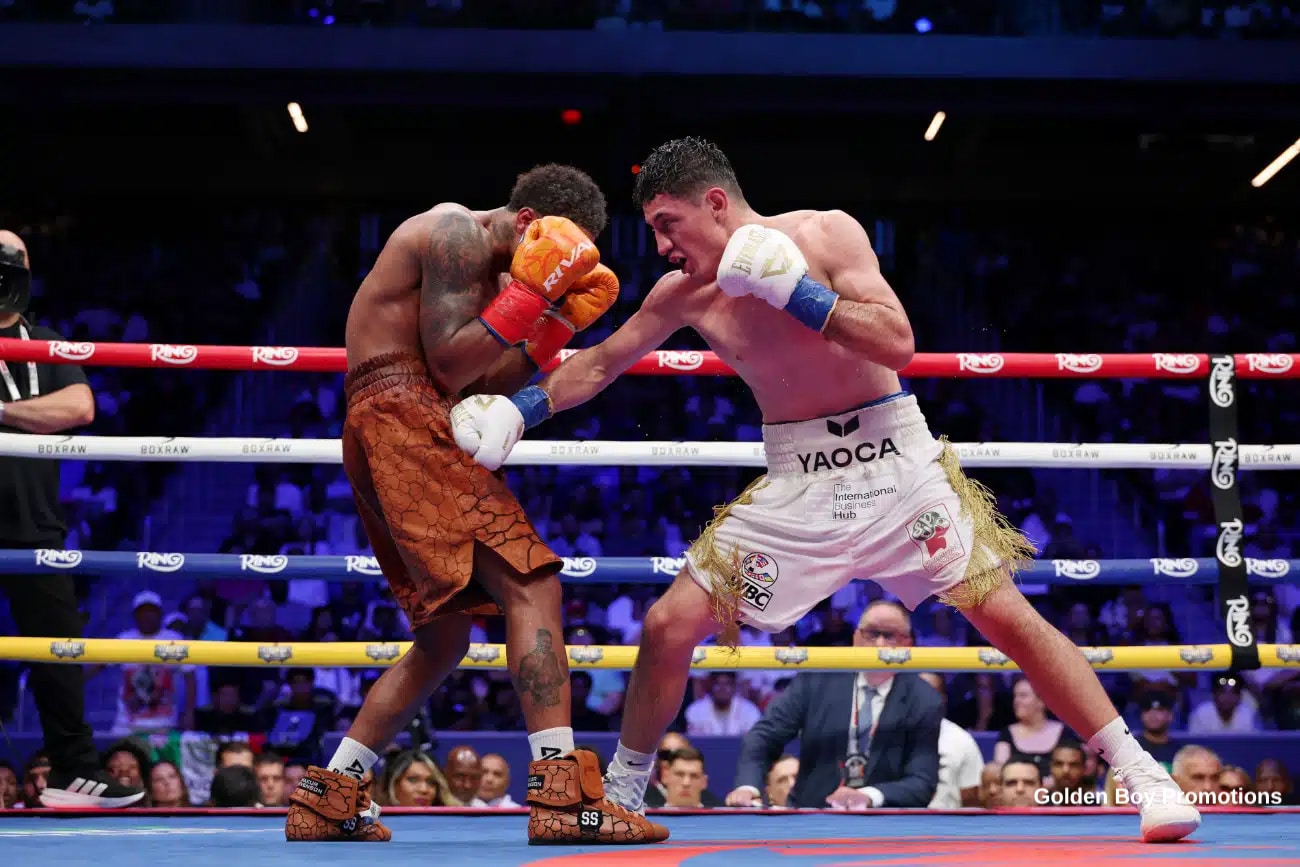
He then gave one example that fit the description: William Zepeda. This detail is critical because Zepeda is not a projected opponent or a style Stevenson hopes to avoid. This is a fighter that Stevenson had already controlled for twelve rounds last July, managing pace, distance and efficiency without ever losing control of the fight.
In this sense, Stevenson outlines a narrow range of threats that he takes seriously and explains why the most obvious version of that threat has already been addressed. Resistance, as he describes it, only appears in certain circumstances that he has already experienced.
The Zepeda fight was once viewed as the moment when Stevenson would have to deal with the constant workload. The power of the punch, the power of the punch and Zepeda’s willingness to overcome resistance led to the expectation that Stevenson might eventually be forced into an uncomfortable exchange. The reality was calmer. Stevenson adjusted the pace early, giving way when it suited him and regaining control when Zepeda tried to accelerate. Production never disappeared and leverage steadily decreased.
“The most you’ll ever get is Zepeda. This was your best hope for resistance,” Shakur told Talking about cigars. “Style makes fights. The style that would give me the most resistance is the guy who throws a million punches and doesn’t stop.”
This experience appears to have shaped Stevenson’s view of his own risk limits. When he says that the style that worries him most is non-stop striking, he is also describing a scenario where the sustained pressure still hasn’t resulted in a change in control. The critical detail here is containment and the ability to limit danger without having to pursue dominance.
How fighters are filtered
Stevenson describes a narrow set of circumstances in which resistance occurs, and these circumstances are hard to replicate once athletes reach the pinnacle of the sport. Players who throw constantly tend to absorb damage early in their career. They are withdrawn, slowed down or carefully moved long before they reach the elite level, and by the time they are matched in main fights, the volume is often already confined. This pattern reflects the structure of current boxing.
High-performance fighters require risk tolerance on both sides. They take penalties, force substitutions and rely on referees to reward consistent work rather than isolated moments. These characteristics are rarely protected over time. Instead, what survived were controlled technicians, selective strikers, and fighters who won rounds without expending excess energy or exposing themselves unnecessarily.
Stevenson definitely falls into the latter group, and his career reflects that. Against Lopez, he rearranged the rounds, removed the angles and allowed the fight to fall into conditions that favored his discipline. The result was not dramatic, but decisive, confirming the same pattern that had been observed earlier in his career.
This performance, coupled with his comments about Zepeda, points to a basic reality. Stevenson’s fights aren’t getting harder because the styles that would complicate them are becoming rarer at the highest level.
But that doesn’t mean Stevenson can’t be beaten. Boxing never works that way, and timing, age and circumstances eventually catch up with everyone. This suggests that the familiar question of who will beat Shakur Stevenson is often asked without much attention to how the sport actually produces fighters capable of withstanding the pressures it describes.
If Stevenson’s own assessment is right, it’s unlikely that an opponent who will need to truly test him will arrive fully formed on the field. And if so, Stevenson has already shown that he knows how to deal with this problem without losing control or chasing unnecessary risks.
This reality may disappoint fans looking for chaos. It explains why Stevenson continues to win the same way and why the list of credible threats is shrinking instead of growing.
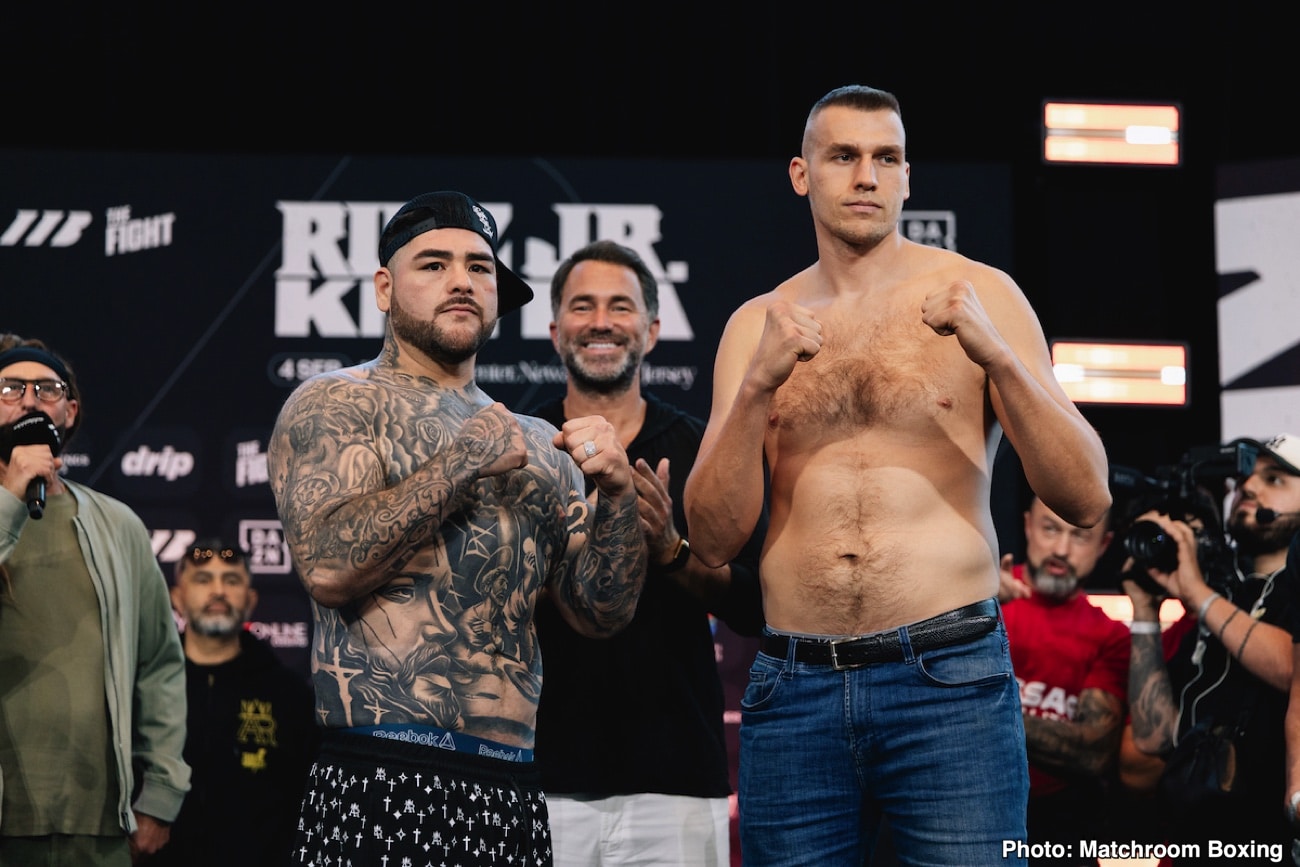



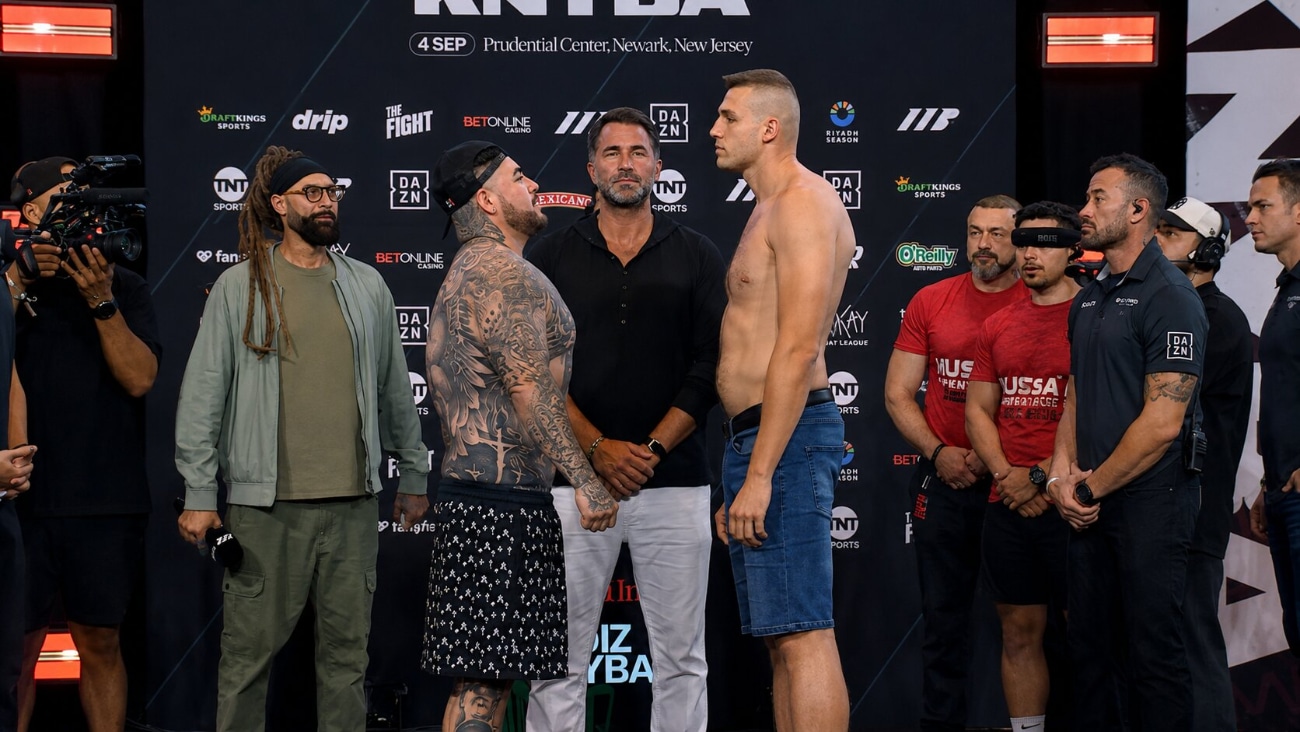
It is Ruiz’s lowest scale reading since he weighed 252 pounds for his July 2018 decision over Kevin Johnson. He was 28 then, active, and still climbing toward the biggest victory of his career. Eight years later, his body has been through extreme fluctuations, long layoffs, and the soft living that followed his 2019 upset of Anthony Joshua.
Two years ago, Ruiz came in at 274.4 pounds for his draw with Jarrell Miller, making this a drop of 20.1 pounds. He was 268 when he stopped Joshua, ballooned to 283 for the rematch, and registered 268.8 against Luis Ortiz in 2022.
The 254.3 pound reading will be sold as evidence of renewed discipline. It may be. Ruiz clearly did more than stroll through camp and hope his name would carry him. Losing that much weight at this stage of his career still brings questions about what the reduction took out of him.
Extra mass is not an automatic source of punch resistance, but Ruiz has spent most of his prime absorbing heavyweight shots with a much thicker body. Cutting down rapidly may leave less natural padding through his upper body and neck. That is worth watching against a 6’7″ opponent whose punches arrive from steep downward angles.
Ruiz also needs his right hand to survive a full fight. He fractured it against Miller and said the injury prevented him from throwing properly during the second half. The lower weight will mean little if he cannot release the three-punch combinations that made him dangerous at close range.
Knyba gives him openings. The Polish heavyweight often stands tall and does not possess elite lateral movement. Added quickness should allow Ruiz to work around the long guard with overhand rights, then dig shorter punches underneath. The danger comes when Knyba grabs him. Repeated clinches may drain Ruiz’s legs and prevent him from establishing the fast inside exchanges he needs.
There is also a difference between looking better on a scale and being restored as a fighter. Ruiz’s inactivity has taken away valuable years, while his reflex-dependent style requires timing that neither roadwork nor dieting can reproduce. At his best, he slipped shots at close range and answered with combinations before opponents recovered. That version has not been seen consistently since the first Joshua fight.
Ruiz faces vastly more pressure here than a fighter merely shaking off ring rust. Ruiz cannot afford another flat performance against an opponent selected to relaunch him. A cautious decision or exhausting struggle would damage his value as a future opponent for the leading names at heavyweight. At 36, there is not enough time for a lengthy rebuild.
The lower number is encouraging, but the fight will reveal what Ruiz lost along with those 20 pounds. A rejuvenated former champion may turn up in Newark. We may just as easily see an older fighter who worked hard to recreate a body from his twenties without recovering the fighter who once occupied it.


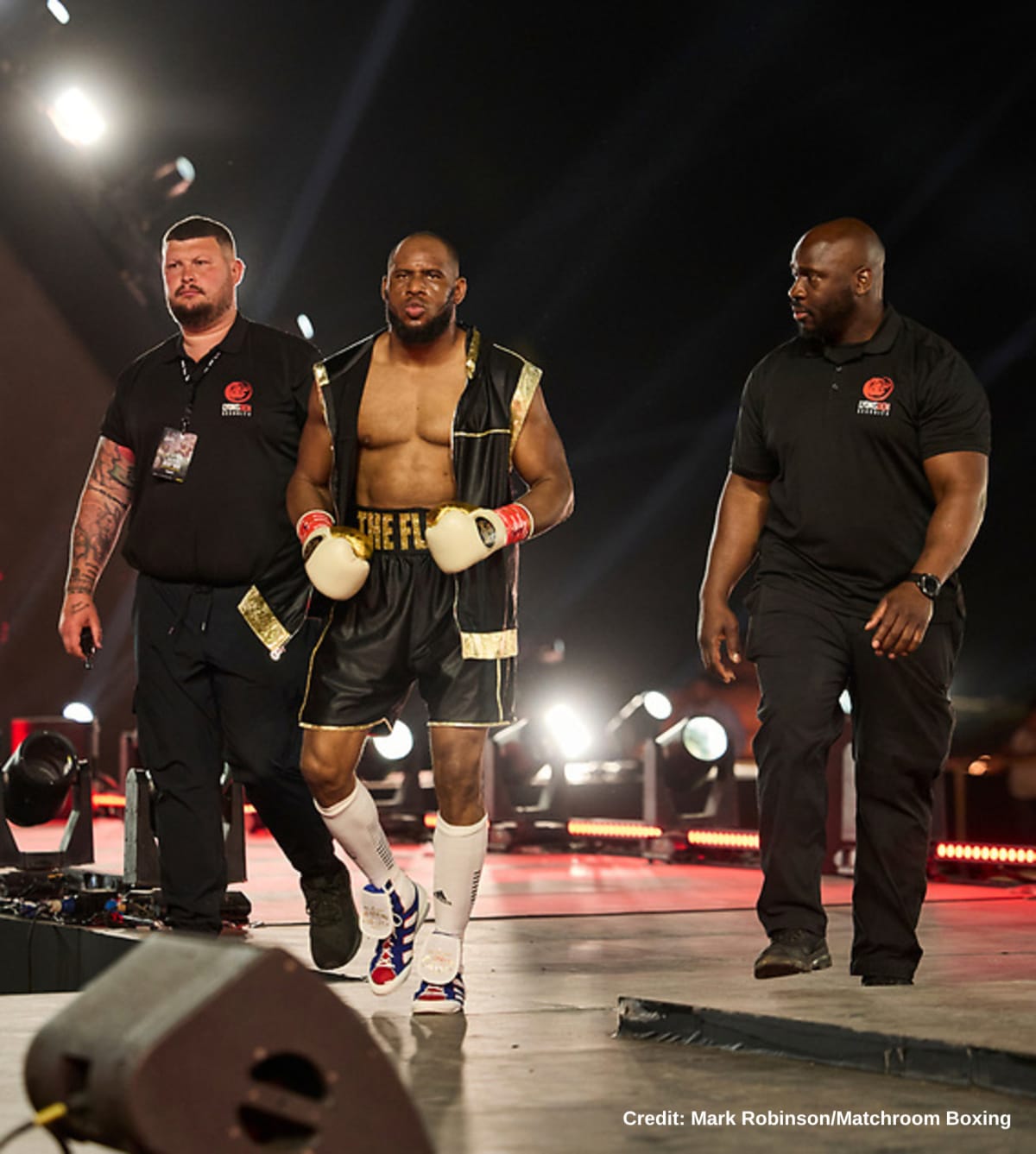


“Now Frank is the mandatory for Hrgovic. We plan on enforcing it. We’ve already had discussions about it. It’s happening,” Valencia told BoxingScene. “There’s not going to be step-asides for no amount of money. He believes he can be world champion and wants to be world champion, and [nothing] is going to interfere with that opportunity.
“Moses wasn’t strong enough to hurt Hrgovic in the first six or seven rounds. It’s a completely different story with Frank Sanchez. Frank has speed and big power.”
Itauma did hurt Hrgovic, dropping him in the second round and landing enough heavy shots to build a huge lead. His failure was not a lack of strength. He emptied his gas tank trying to force a stoppage, abandoned his jab as fatigue set in, and eventually became a stationary target.
The Cuban presents a different test. He is more comfortable boxing at a controlled pace, changing angles, and forcing slower heavyweights to reach for him. Hrgovic had trouble finding Itauma when the 21-year-old stayed disciplined early. That kind of movement is available to Sanchez without the pressure to satisfy a British crowd by turning every exchange into a firefight.
The danger is Sanchez’s low punch output. Against Efe Ajagba and Christian Hammer, he often waited to land single counter rights or lead left hooks. Hrgovic keeps throwing after taking clean punches and can steal rounds through activity alone. Sanchez cannot circle for three minutes, land two eye-catching counters, and assume the judges will ignore everything coming back.
Agit Kabayel also exposed the fastest route to breaking Sanchez down: sustained body punching. Hrgovic is not a committed body attacker. He prefers straight rights upstairs and rough right hands in close, which allows Sanchez to use his upper-body movement against predictable head shots. If Hrgovic cannot slow his legs by attacking downstairs, chasing him around the ring may turn into an ugly night.
Hrgovic still carries physical force that Richard Torrez Jr. could not match. At roughly 245 pounds, he can make clinches exhausting and punish Sanchez once his movement declines. The real test comes after the eighth round, when Sanchez must continue slipping heavy shots while producing enough offense to protect his lead.
Abel Sanchez helped Hrgovic settle down against Itauma by getting him to stop lunging and allowing the younger fighter to exhaust himself. Similar patience will be required against Frank Sanchez. Reckless pursuit gives the Cuban the exact counterpunching opportunities he wants.
Frank Sanchez may possess the tools to hurt Hrgovic in ways Itauma failed to sustain, but Valencia is overlooking the champion’s durability, output, and ability to keep applying physical pressure. One sharp combination will not be enough over 12 rounds.
Hrgovic’s trainer wants the champion’s cuts to heal before a January return. Valencia is willing to wait, provided Frank Sanchez remains next.
Massive paychecks kept rolling in without Joshua. Ruiz collected lucrative pay per view main event money against Arreola and Luis Ortiz, enabling him to stay rich while keeping his schedule quiet. Arreola dropped him early, Ortiz forced him into sporadic bursts, and Jarrell Miller battered him down the stretch in August 2024 to force a draw.
Hurting his right hand against Miller offers little excuse for the decline. Ruiz has failed to deliver a commanding performance in four consecutive outings following his career-best win over Joshua. Camp insiders promise better conditioning and renewed focus before every return, yet the actual ring work routinely mocks the promotional rhetoric.
Atlas still ranks Ruiz as the superior technician heading into Friday at Prudential Center in Newark, New Jersey. Hand speed, punch resistance, and seasoned ring generalship all tilt toward the veteran. Atlas simply refuses to endorse Ruiz until the California heavyweight proves his appetite survived a lifestyle sustained entirely by past paydays.
“There is a window of opportunity for Knyba to use the reach, use the height, use his legs a little bit, and box on the outside. I’m curious to see if I’m going to think that Knyba is a little bit of a live dog at three-to-one. I ain’t laying it so fast because of those ifs,” Atlas said on THE FIGHT with Teddy Atlas.
Thursday at the weigh in, Ruiz registered 254.3 pounds, his lowest official reading since 2018. The figure represents a 20.1 pound drop from the 274.4 pounds he carried into the ring against Miller. Ruiz admitted ballooning near 300 pounds during his long sabbatical, giving merit to camp reports detailing a drop of more than 40 pounds throughout training.
Trimming down looks clean for promotional cameras, though bathroom scales cannot measure actual fighting endurance. Ruiz has to demonstrate that shedding blubber revived his footwork rather than simply leaving him depleted. At 36, stripping off substantial weight after a long layoff rarely restores the blistering hand combinations of 2019.
Knyba suffered a three-round stoppage against Agit Kabayel in January, yet Ruiz brings an entirely different stylistic approach. Kabayel walked down the giant Polish contender, battering his ribs without intermission and stripping away room to punch or clinch.
Relentless body punching vanished from Ruiz’s arsenal years ago. The former unified king now hunts overhand rights, fires sudden hooks up top, and retreats to admire his handiwork. Hunting exclusively around Knyba’s earmuffs will allow the taller man to tie up the Californian, reset center ring, and establish his preferred distance.
Atlas spots that tactical trap immediately. Ruiz possesses the timing to counter over Knyba’s pole jab, yet single counterpunches accomplish little without persistent ring cutting. Following Knyba around the perimeter gives the underdog freedom to pile up points behind his natural reach.
Newark also gives Knyba an advantage Kabayel denied him in Germany, starting with genuine regional backing. Knyba trains locally and owns three victories inside Prudential Center. Northern New Jersey features a massive Polish population ready to turn the arena into a boiler room against a West Coast invader. This booking functions as a home game, not a neutral showcase.
Linking up with Eddie Hearn and Matchroom demands an emphatic statement. Heavyweight hardware is scattering across multiple sanctioning bodies, opening avenues for marketable names. That promotional reality explains why Ruiz commands big television slots at his age.
Laboring to an ugly points win will do zero favors for Ruiz’s marketability. Sputtering through a low-tempo struggle against Knyba merely proves the transformation stopped at the bathroom scale.
Atlas asks the proper question because the malaise has lingered for seven years. Friday reveals how much fight actually exists once Knyba forces Ruiz to work.



Tom Aspinall’s UFC return hits medical roadblock due to eye injury

Anthony Smith set to return Oct. 2 amid four felony charges

Andy Ruiz Jr. Drops 20 Pounds in Preparation for Knyba Fight


-

 MMA2 days ago
Tommy McMillen takes aim at unbeaten UFC rival: He runs his mouth
-
 Boxing2 days ago
Canelo Set to Defeat Mbilli Before Epic Showdown with KO Artist in Historic Boxing Match
-

 MMA2 days ago
Brendan Allen, Christian Leroy Duncan collide in UFC Vegas 122 main event
-
 MMA2 days ago
Dana White awards 5 UFC contracts after wild DWCS Week 4
-
 MMA2 days ago
Glover Teixeira says Alex Pereira would KO Josh Hokit in Round 1
-
 Boxing2 days ago
Austin Williams Challenges Vito Mielnickis Contender Claims in High-Stakes Showdown
-

 MMA2 days ago
Bella Mir addresses mom’s viral reaction on night of historic DWCS upset
-

 MMA2 days ago
‘I will honor his name’: Chute Boxe pays tribute to late UFC fighter Allan Nascimento